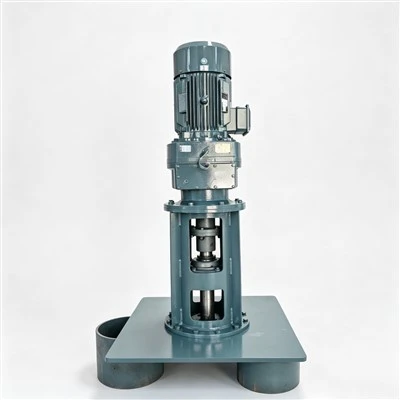
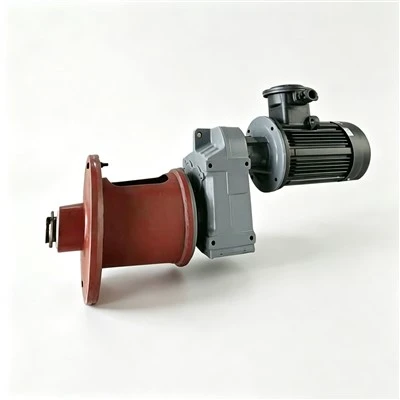
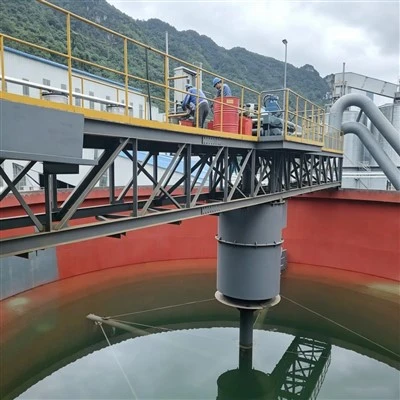
The core performance of scraper equipment lies in its highly efficient solid-liquid separation capability. Through the continuous rotation or reciprocating motion of scraper blades or arms, the equipment uniformly scrapes sediment and sludge from the bottom of sedimentation tanks or thickeners, conveying them to the sludge discharge outlet to achieve the separation of solids from the clarified liquid. The equipment is capable of processing suspended solids of varying concentrations and particle sizes, ensuring the clarity of the supernatant liquid and preventing the accumulation of bottom sludge, which could otherwise compromise tank capacity and water quality.
Scraper equipment features automated operation and stable performance. Modern units are typically equipped with motor drives, gear reducers, and PLC or variable frequency control systems, allowing for the precise adjustment of scraper speeds and sludge discharge cycles. The equipment operates smoothly with minimal vibration and low noise levels, maintaining stable performance even under heavy loads or during prolonged, continuous operation. This automated functionality significantly reduces the physical workload on operators while enhancing operational safety.
The performance of scraper equipment is further characterized by its broad adaptability and exceptional durability. The equipment is suitable for a wide range of environments-including wastewater treatment plants, industrial wastewater facilities, mining tailings ponds, and chemical thickeners-demonstrating robust adaptability to acidic, alkaline, or highly abrasive operating conditions. The scraper blades, arms, and support structures are constructed from wear-resistant and corrosion-resistant materials, while the transmission systems and bearings feature optimized designs to ensure reliable long-term operation.