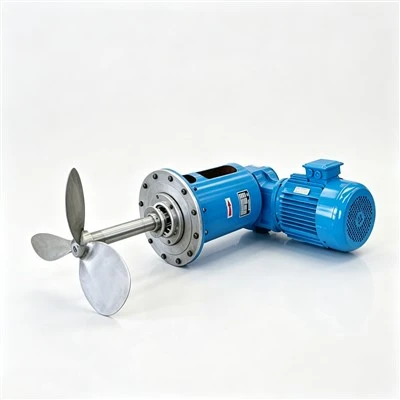
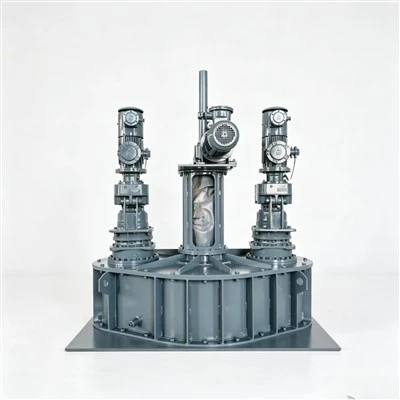
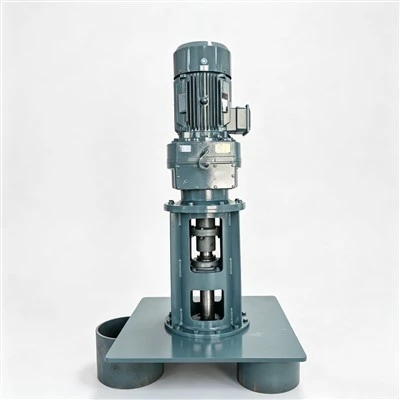
Central Drive Thickener | Industrial Thickening Equipment
A Central Drive Thickener is an industrial solid-liquid separation machine that uses gravity settling to concentrate suspended solids in slurry or sludge. A centrally driven rake assembly moves settled solids toward the underflow discharge, while clarified liquid overflows at the tank perimeter.
Typical buyers: Mining companies, mineral processing plants, metallurgical facilities, wastewater treatment operators and engineering contractors.
Key selection factors: Tank diameter, solids throughput, feed characteristics, target underflow concentration, drive torque and site installation conditions.
-
![Sedimentation Thickener]() Sedimentation ThickenerSedimentation Thickener is an industrial equipment mainly used for solid-liquid separation and slurry concentration. It uses gravity sedimentation to gradually settle suspended solid particles in the slurry, achieving effective...view more
-
![Industrial Sedimentation Tank Scraper]() Industrial Sedimentation Tank ScraperThis Industrial Sedimentation Tank Scraper is a purpose-built supporting device designed for the sedimentation section of water treatment workflows. It continuously and automatically scrapes settled sludge at the tank bottom to the...view more
-
![Mining Thickener]() Mining ThickenerMining Thickener is core solid-liquid separation equipment developed based on the gravity sedimentation principle. Optimized specifically for mine washing and separation applications, it efficiently thickens slurry to separate clear...view more
-
![Municipal Sewage Sludge Scraper]() Municipal Sewage Sludge ScraperMunicipal sewage features large water volumes and continuous discharge. Manual sludge cleaning requires plant shutdowns and tank draining, which severely disrupt regular urban sewage treatment. The Municipal Sewage Sludge Scraper...view more
-
![High Efficiency Clarifier Tank Thickener]() High Efficiency Clarifier Tank ThickenerThe core strength of adopting the High Efficiency Clarifier Tank Thickener lies in its outstanding separation efficiency. Its built-in inclined plates enhance sedimentation and greatly shorten settling cycles. For the same processing...view more
-
![Clarifier Thickener]() Clarifier ThickenerThe Clarifier Thickener achieves high-efficiency solid-liquid separation with built-in inclined plates that boost sedimentation performance, outperforming conventional sedimentation tanks in processing speed. For the same throughput, it...view more
-
![Center Drive High-Efficiency Thickener]() Center Drive High-Efficiency ThickenerThrough mechanical transmission, it drives the sludge scraping frame to rotate at a constant speed, scraping solid materials such as sludge and ore sludge settled at the bottom of the tank to the central sludge discharge port, so as to...view more
-
![Mineral Processing Thickener]() Mineral Processing ThickenerThe Mineral Processing Thickener is a specialized solid-liquid separation equipment for the mining industry. As a core mineral processing equipment, the Mineral Processing Thickener concentrates low-concentration pulp, tailings and...view more
-
![High Efficiency Thickener]() High Efficiency ThickenerThe design of Ningye high-efficiency thickener incorporates numerous innovative features. Its performance in the feed well, rake frame structure, drive system and dosing system is outstanding, with the processing capacity per unit area...view more
-
![Settling Thickener]() Settling ThickenerIt is widely used in multiple industries including mining, metallurgy, chemical engineering and environmental protection, serving as an essential device to optimize production processes and control operational costs. The equipment...view more
-
![Solid-Liquid Separation Thickener]() Solid-Liquid Separation ThickenerSolid-Liquid Separation Thickener is a specialized equipment that achieves solid-liquid separation and concentration based on gravity sedimentation. Its core function is to concentrate low-solid-content suspensions (such as ore pulp,...view more


Applications & process requirements
Mining and mineral processing
Used for thickening mineral concentrates and tailings, with underflow sent to downstream filtration, processing or tailings management.
Hydrometallurgy
Used in solid-liquid separation and counter-current decantation (CCD) circuits to support washing and process-liquid recovery from leach residues.
Industrial wastewater treatment
Concentrates suspended solids and sludge before further treatment, pumping or dewatering. Actual overflow quality depends on feed characteristics and the overall treatment process.
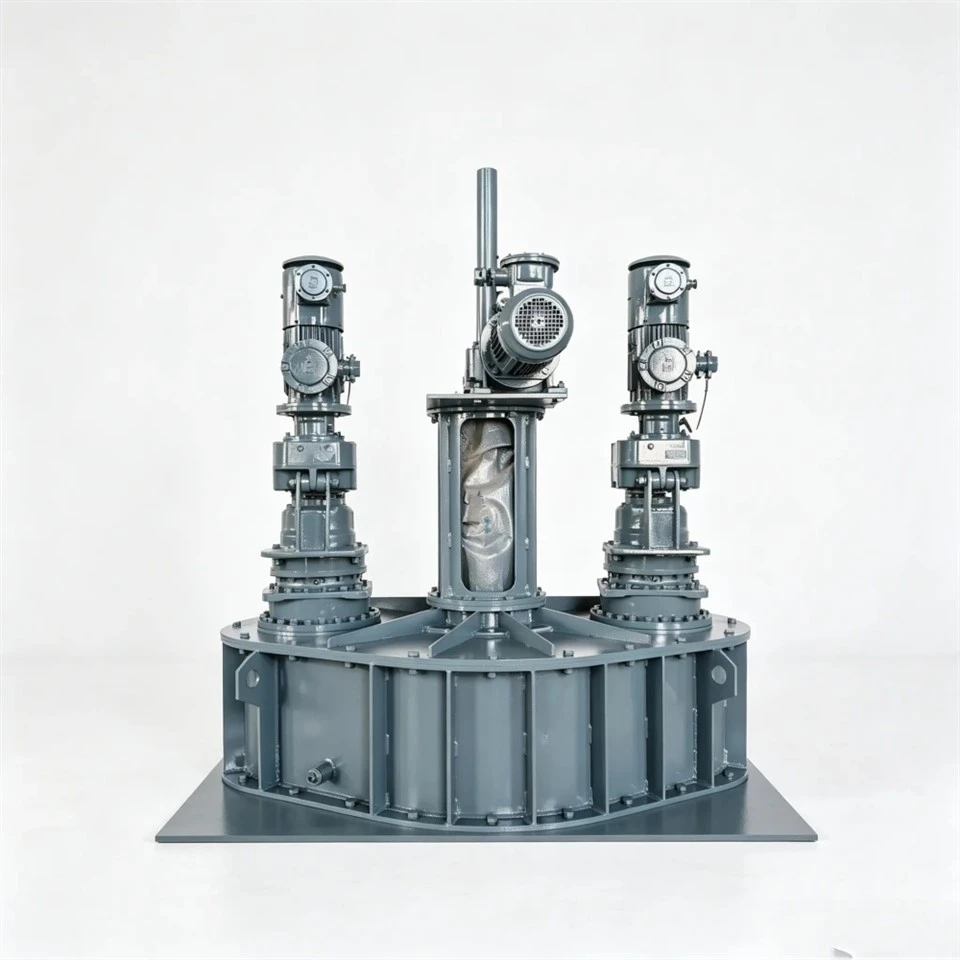
Drive system & rake configuration
Central drive and gearbox
The motor and gearbox transmit torque to the rake assembly. Drive capacity should be selected according to tank dimensions, solids loading and expected operating torque.
Rake assembly
Rake arm layout and blade geometry are selected according to tank design, settling behavior and underflow discharge requirements.
Overload protection and rake lifting
Depending on the selected configuration, protection may include torque monitoring, alarms, motor trips or a mechanical, electromechanical or hydraulic rake-lifting system. Available functions and control settings require technical confirmation.
Technical specifications
Final specifications depend on the selected model, process conditions and project design. Confirm the following parameters during technical evaluation.
|
Parameter |
Specification or selection requirement |
|
Tank diameter |
Confirm available model range and tank design |
|
Dry solids throughput |
Specify required capacity in t/day |
|
Slurry flow rate |
Specify feed flow in m³/h |
|
Feed solids concentration |
Specify feed solids content by weight |
|
Target underflow concentration |
Specify required solids content by weight |
|
Drive torque |
Confirm rated torque in kN·m |
|
Drive motor |
Confirm rated power in kW and supply voltage |
|
Gearbox |
Confirm type, ratio and rated output torque |
|
Support structure |
Bridge-supported or center-column-supported, subject to engineering design |
|
Wetted materials |
Confirm material grades, coatings or linings according to slurry conditions |
|
Rake-lifting system |
Confirm fixed or lifting configuration and available control functions |
|
Underflow discharge |
Confirm outlet arrangement and downstream connection requirements |
Feed characteristics & equipment selection
Throughput and feed concentration
Provide dry solids throughput, slurry flow rate and feed solids concentration to establish the required thickening capacity.
Particle size and settling behavior
Provide particle size distribution and available settling test results. Where flocculants are used, include the flocculant type, dosage and relevant test conditions.
Underflow and process requirements
Specify target underflow solids concentration, expected slurry viscosity and downstream pumping, filtration or disposal requirements.
Slurry and site conditions
Identify abrasive or corrosive properties, operating temperature, tank dimensions, foundation conditions and installation constraints. These factors influence material selection, drive sizing and structural design.

Materials and corrosion protection
Material grades, coatings and linings should be selected according to slurry chemistry, abrasion conditions and operating temperature.
Drive and rake configuration
Drive capacity, rake geometry and optional lifting arrangements can be evaluated against the required throughput and solids characteristics.
Tank integration and retrofit
For existing tanks, provide tank drawings, dimensions, foundation data, support details and available installation space. Engineering review is required to confirm structural compatibility and interface requirements.
Quality control & inspection
Material and fabrication checks
Material verification, dimensional inspection and welding checks should follow the approved manufacturing and project quality plan.
Drive assembly inspection
Motor, gearbox, shaft and drive assembly inspections should follow the applicable equipment specifications and inspection procedures.
Non-destructive testing
Ultrasonic testing (UT) or magnetic particle testing (MT) may be specified for applicable components and welds according to design requirements and the agreed inspection plan.
Factory acceptance testing
Running tests and other acceptance checks should be defined in the project specification, including test scope, operating conditions and acceptance criteria.
Project supply & documentation
Engineering documents
General arrangement drawings, interface dimensions, load data and electrical drawings can be specified according to project requirements.
Quality and inspection records
Material certificates, welding records, inspection reports and factory test records should be agreed upon before order confirmation.
Operation and maintenance documents
Documentation should cover operating procedures, lubrication requirements, inspection intervals and maintenance instructions for the supplied configuration.
FAQ & request a quote
Shandong Ningye Machinery Equipment Co., Ltd. is one of the most reliable central drive thickener manufacturers and suppliers in China. With abundant experience, we warmly welcome you to buy discount central drive thickener made in China here from our factory. Quality products and low price are available.
Center Drive High Efficiency Thickener, High Efficiency Thickener, Mineral Processing Thickener