Industrial Mixing Equipment | Types, Specifications & OEM Solutions
Industrial mixing equipment combines, disperses, suspends or circulates liquids and other process materials in industrial tanks and vessels. Equipment selection depends on fluid properties, tank geometry, mixing objectives and operating conditions.
Typical buyers: Chemical manufacturers, water and wastewater treatment operators, process engineering companies, equipment integrators and industrial distributors.
Key selection factors: Viscosity, solids content, tank dimensions, required mixing duty, wetted materials, drive configuration and sealing requirements.
-
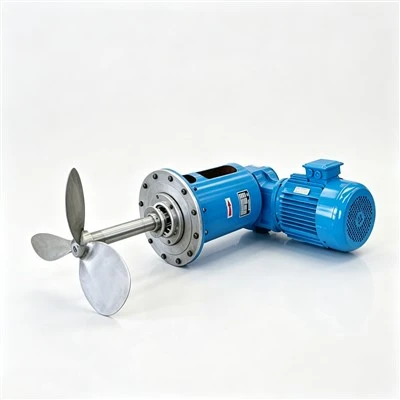
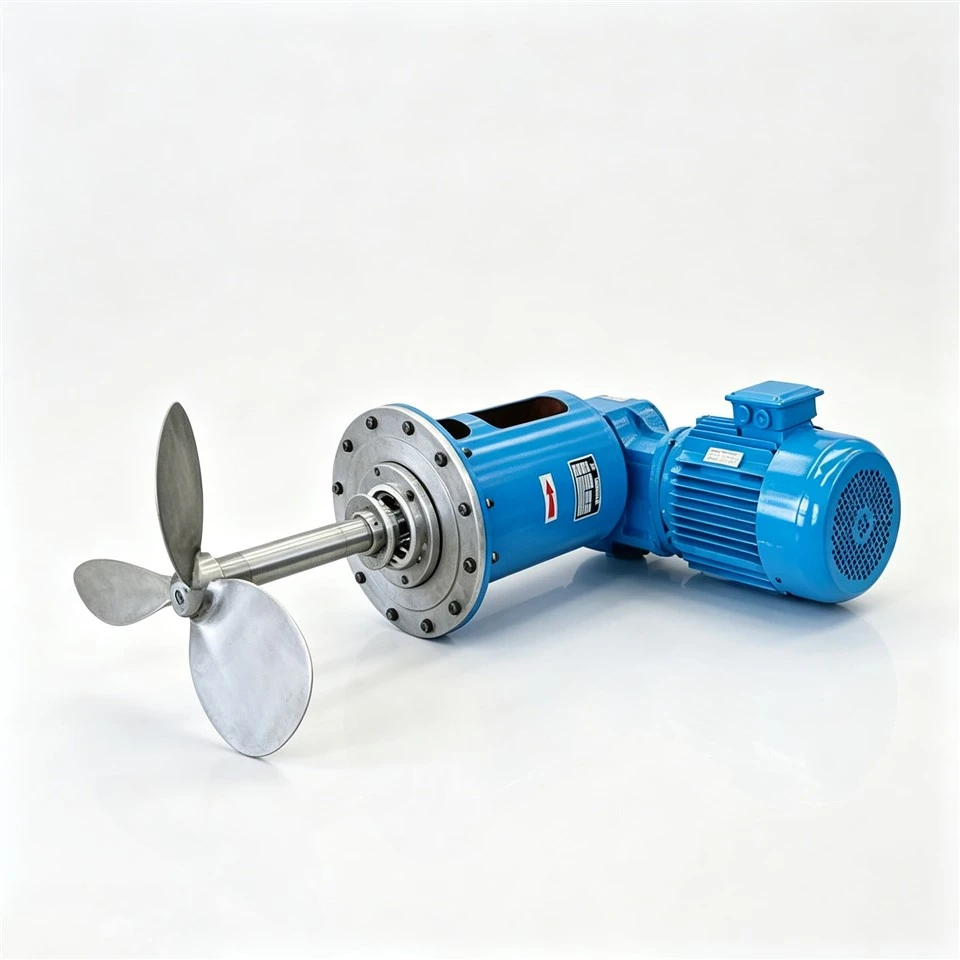
![Side Mounted Industrial Stirrer]() Side Mounted Industrial StirrerThe Side Mounted Industrial Stirrer is a mechanical mixing device widely used in industrial storage tanks, reaction vessels, and large liquid storage containers. It is installed on the side wall of a tank, with the stirring shaft and...view more
-
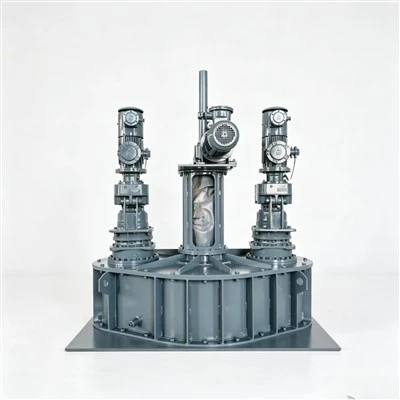
![Wastewater Mixing Equipment]() Wastewater Mixing EquipmentWastewater Mixing Equipment is widely used in wastewater treatment and environmental protection projects. It is primarily designed to promote thorough mixing between wastewater and treatment media, improve fluid circulation within...view more
-
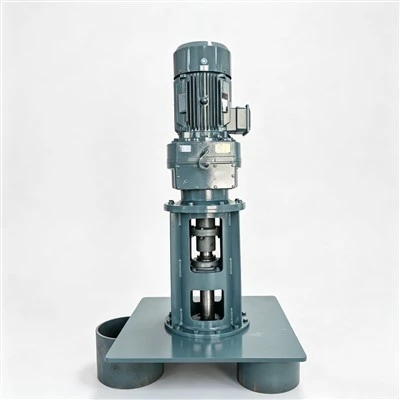
![Heavy Duty Vertical Mixer]() Heavy Duty Vertical MixerHeavy Duty Vertical Mixer are industrial mixing machines designed for material blending, mixing, dispersion, and uniform processing in a wide range of production environments. They feature a robust overall structure and are suitable for...view more
-
![Side Entry Tank Mixers]() Side Entry Tank MixersSide Entry Tank Mixers are mixing equipment installed on the side of storage tanks, process vessels, or large industrial containers. They use a suitable impeller design and drive system to create stable fluid circulation, allowing...view more
-
![Vertical Agitator]() Vertical AgitatorVertical Agitator is a general‑purpose industrial mixing equipment suited for diverse industry operating conditions. Driven by a vertical main shaft, its stirring assembly generates cyclic material movement to achieve rapid homogeneous...view more
-
![Heavy Duty Industrial Mixers]() Heavy Duty Industrial MixersHeavy Duty Industrial Mixers handle high‑specific‑gravity and high‑viscosity materials that are difficult to agitate. Conventional equipment tends to overload and shut down, whereas this model delivers high structural strength and...view more
-
![Heavy Duty Industrial Agitator]() Heavy Duty Industrial AgitatorConventional mixing equipment lacks sufficient torque for coarse‑particle and high‑viscosity materials, which often leads to motor stalling and component damage. Heavy Duty Industrial Agitator features ample torque reserve and a...view more
-
![Side Entry Industrial Mixers Agitators]() Side Entry Industrial Mixers AgitatorsSide Entry Industrial Mixers Agitators deliver a key benefit of saving tank top space, eliminating interference between tank-top pipelines, access staircases, feeding equipment and the mixing assembly. The circulating flow created by...view more
-
![Industrial Side Entry Agitators]() Industrial Side Entry AgitatorsIndustrial Side Entry Agitators feature high space utilization without restrictions from tank-top pipelines and equipment, suiting all types of large storage tanks. They operate under lower loads while delivering equal mixing...view more
-
![Industrial High-Power Mixer]() Industrial High-Power MixerIndustrial High-Power Mixer delivers robust power to handle high-viscosity and large-volume materials. It achieves far more uniform mixing results than ordinary equipment, effectively improving the quality of finished products....view more
-
![High-Power Mixer]() High-Power MixerHigh-Power Mixer generates strong torque to handle heavy, viscous materials easily. It delivers stable and uniform mixing results to guarantee finished product quality.view more
Featuring a robust overall structure and excellent anti-wear... -
![Vertical Industrial Agitator]() Vertical Industrial AgitatorThe Vertical Industrial Agitator is a classic equipment with the stirring device installed on the top of the tank, and the stirring shaft extends vertically into the container. Suitable for reaction kettles and industrial mixing tanks,...view more


Product types & applications
Vertical mixers
Top-mounted mixers with vertical shafts and application-specific impellers. Used for liquid blending, solid suspension and other tank mixing duties, depending on the configuration.
Side-entry agitators
Installed through the tank sidewall for applications such as liquid circulation in large storage tanks. Selection depends on tank geometry, fluid properties and operating conditions.
High-shear mixers
Use rotor-stator or similar mixing mechanisms to disperse materials and reduce agglomerates. Suitable configurations depend on the required dispersion quality, viscosity and process conditions.
Portable mixers
Designed for flexible installation on compatible tanks or containers. Used for batch preparation and other mixing tasks where equipment mobility is required.
Specialized mixing and separation equipment
Thickener drives and sludge scrapers support solid-liquid separation and sludge collection in treatment processes. They are distinct from conventional liquid mixers and should be selected according to tank design and process requirements.
How to select mixing equipment


Process objective
Define whether the application requires liquid blending, solid suspension, powder incorporation, gas dispersion or sludge collection. Different duties require different equipment configurations.
Fluid properties
Provide viscosity, operating temperature, density, solids concentration and relevant rheological characteristics. For non-Newtonian fluids, specify the conditions under which viscosity is measured.
Tank geometry
Confirm tank diameter, liquid height, bottom shape, internal baffles, mounting position and available installation space. These factors affect shaft length, impeller selection and mixing performance.
Operating conditions
Specify continuous or intermittent operation, required operating speed, ambient conditions, corrosion exposure and hazardous-area classification where applicable.
Maintenance and integration
Identify available lifting space, seal replacement access, connection dimensions, control requirements and compatibility with the existing process system.
Technical specifications
Final specifications depend on the equipment type, process conditions and engineering requirements. The following table identifies the main parameters to confirm during selection and quotation.
|
Technical parameter |
Specification to confirm |
|
Equipment type |
Vertical mixer, side-entry agitator, high-shear mixer or portable mixer |
|
Motor power |
Rated power in kW |
|
Operating speed |
Output speed in rpm; fixed-speed or variable-speed control |
|
Mixing vessel |
Tank diameter, liquid height and bottom configuration |
|
Shaft |
Length, diameter, material and support arrangement |
|
Impeller |
Type, diameter, number and mounting configuration |
|
Wetted materials |
Material grades for shafts, impellers and other wetted parts |
|
Drive system |
Gear reducer, direct drive or other available configuration |
|
Sealing system |
Mechanical seal, packing or other compatible arrangement |
|
Electrical requirements |
Supply voltage, frequency, protection rating and hazardous-area requirements, as applicable |
|
Installation |
Mounting flange, connection dimensions and available clearance |
Actual operating ranges, dimensions, tolerances and material options should be confirmed against the relevant product datasheet and approved technical drawings.
Materials & construction
Wetted materials
Material selection depends on the process medium, temperature, corrosion conditions and cleaning requirements. Available options may include carbon steel, stainless steel and application-specific corrosion-resistant alloys or linings, subject to product availability.
Shaft and impeller
Shaft dimensions, impeller geometry, material and support arrangement should be selected according to the mixing duty, operating speed and mechanical loads.
Drive and mounting structure
Drive configuration and mounting design depend on required torque, installation conditions, vessel structure and maintenance access.
Surface finish
For sanitary or contamination-sensitive processes, specify the required surface finish, wetted-area design and cleaning requirements. Confirm the applicable finish values and inspection methods before ordering.
Customization & OEM
Mechanical customization
Shaft length, impeller configuration, mounting dimensions and connection interfaces can be evaluated against project drawings and operating requirements.
Materials and sealing
Wetted materials, seal arrangements and corrosion-resistant options should be matched to the process medium and operating conditions.
Drive and controls
Motor, gearbox, variable-frequency drive and control-panel requirements can be specified according to the process and electrical installation.
OEM and project integration
Technical drawing review, equipment identification, documentation and other OEM requirements should be agreed before production. Custom configurations are subject to engineering review and manufacturing capability.
Inspection and documentation requirements should be defined according to the equipment design, purchase specification and applicable standards.
Material verification
Confirm material grades and the availability of material certificates and traceability records for specified components.
Dimensional inspection
Check critical dimensions, mounting interfaces, shaft geometry and other drawing-defined tolerances.
Welding and surface inspection
Where applicable, specify weld inspection methods, inspection coverage, surface condition and acceptance criteria.
Mechanical testing
Factory testing may include checks of rotation, motor operation, gearbox condition, vibration and other agreed parameters. Test scope and acceptance limits should be confirmed in the purchase specification.
Documentation
Available documents may include approved drawings, equipment datasheets, operation and maintenance manuals, spare parts lists and inspection or test reports, depending on the order requirements.
Bulk supply & project support
Confirm technical specifications, drawings, installation interfaces and approval requirements before production.
Packaging should suit equipment dimensions, component protection needs, transport method and destination requirements. Export packaging and compliant wood packaging can be specified where applicable.
Identify recommended spare parts according to the equipment configuration, including applicable seals, bearings and other replaceable components.
Agree on warranty terms, technical support scope, spare parts availability and service arrangements before order confirmation.
Delivery schedules depend on equipment configuration, material availability, engineering approval and production requirements. Confirm the delivery schedule in the quotation.
FAQ & request a quote

Request a quote
Submit your process data, tank drawings and technical requirements for equipment selection and quotation. Final specifications, optional configurations, testing scope and delivery terms should be confirmed in the approved technical proposal.
Shandong Ningye Machinery Equipment Co., Ltd. is one of the most reliable industrial mixing equipment manufacturers and suppliers in China. With abundant experience, we warmly welcome you to buy discount industrial mixing equipment made in China here from our factory. Quality products and low price are available.