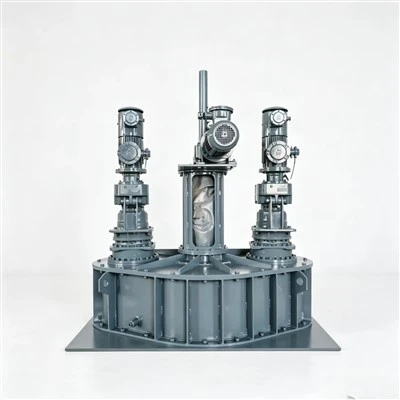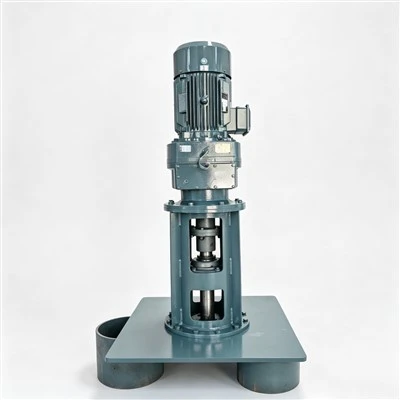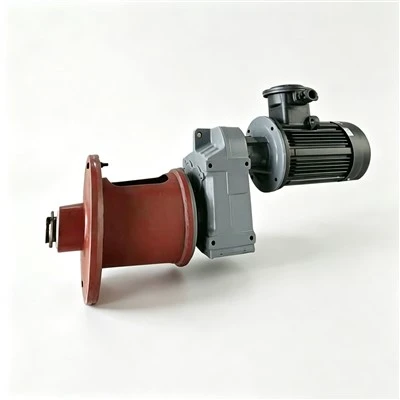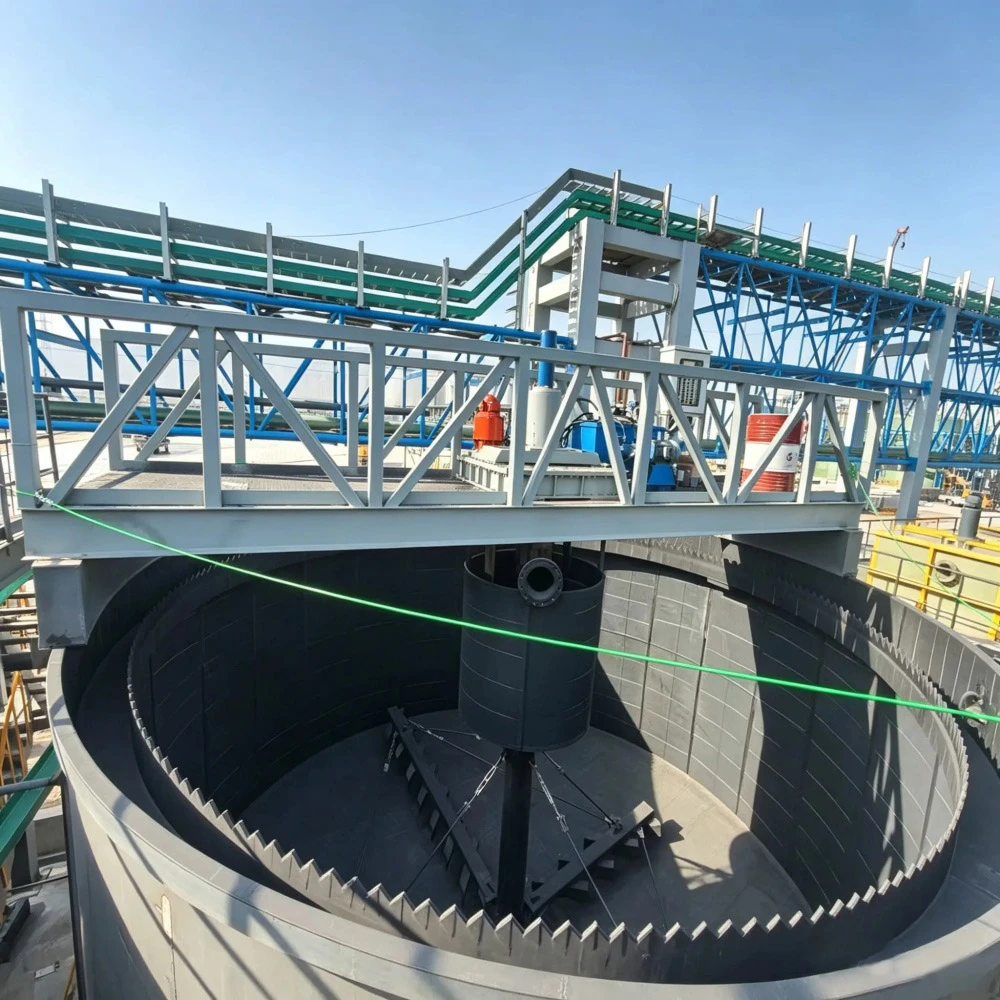
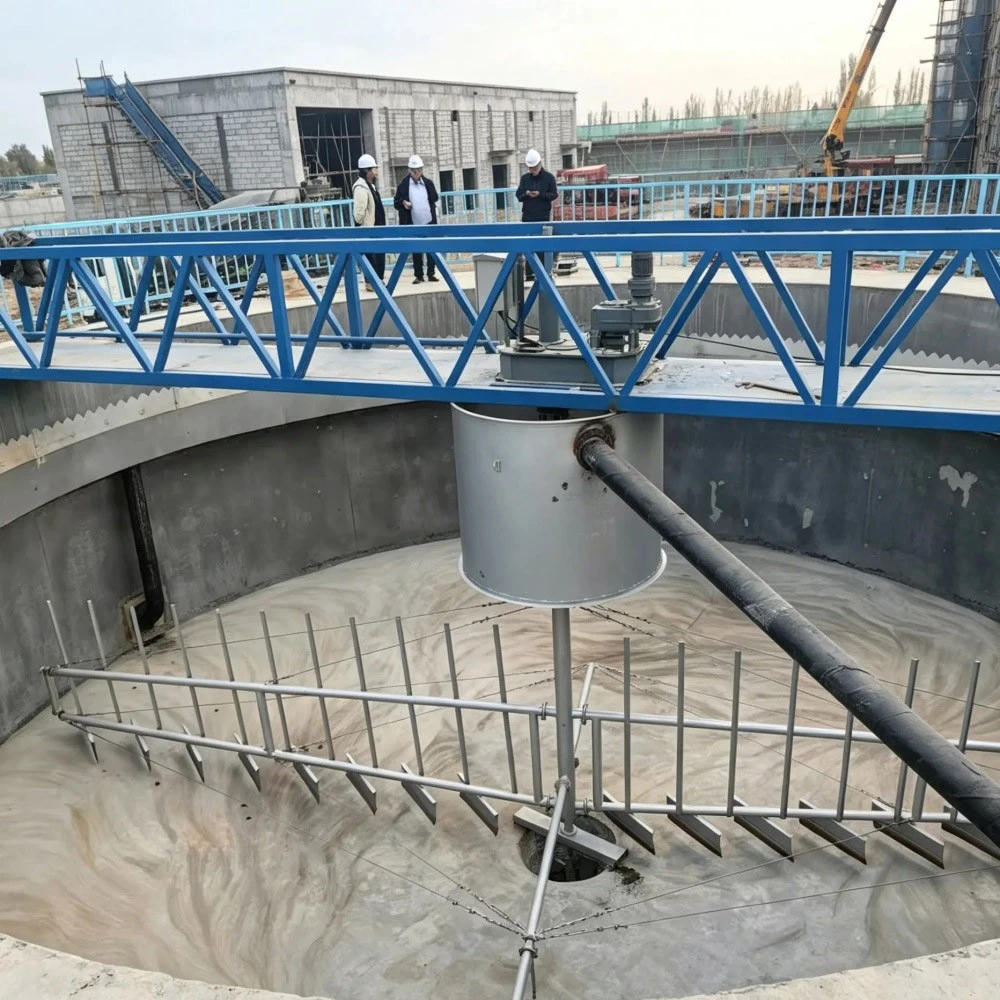
The High Efficiency Thickener primarily relies on the density difference between solid particles and liquid to achieve solid-liquid separation through sedimentation, thickening, and stratification. In mineral processing, tailings treatment, and industrial wastewater treatment, slurry typically contains solid particles of various sizes. The High Efficiency Thickener promotes the gradual settling of these particles, allowing the solids to separate effectively from the liquid and improving the conditions for subsequent processing.
First, the slurry to be treated enters the High Efficiency Thickener through the feed system. To minimize disturbances to the sedimentation process, the slurry should enter the equipment steadily and be distributed as evenly as possible throughout the settling zone. A suitable feeding method helps prevent excessive local flow velocities and uneven material distribution, creating favorable conditions for solid particles to settle.
Second, under the force of gravity, solid particles with a higher density gradually settle toward the bottom of the equipment. For fine particles that settle slowly under natural conditions, appropriate flocculation treatment can be applied according to the characteristics of the material. Flocculants promote the aggregation of fine particles into larger flocs, improving their settling performance. However, flocculation effectiveness depends on factors such as material properties, slurry conditions, and chemical dosage. Therefore, these factors should be adjusted according to the actual processing requirements.
As solid particles continue to settle, distinct solid-liquid separation zones gradually form inside the equipment. The suspended solids content in the upper liquid decreases, allowing the clarified liquid to flow out through the overflow area. Meanwhile, the settled solids accumulate at the bottom, forming a concentrated underflow. Some High Efficiency Thickener models are also equipped with mechanical rakes that slowly move the settled material toward the discharge area, helping reduce excessive accumulation at the bottom.
Finally, the feeding rate, flocculation conditions, and underflow discharge process must be coordinated to maintain relatively stable sedimentation and discharge. The actual separation performance depends not only on the equipment itself but also on particle size, particle density, slurry viscosity, and feeding conditions. Therefore, operating conditions should be selected according to the characteristics of the material to achieve effective solid-liquid separation.