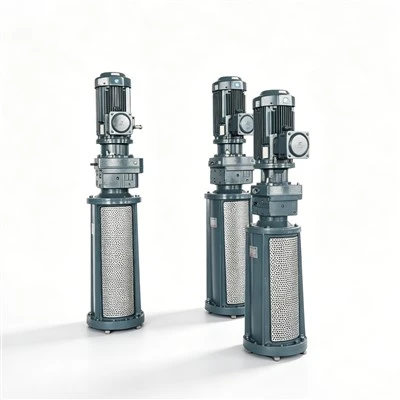
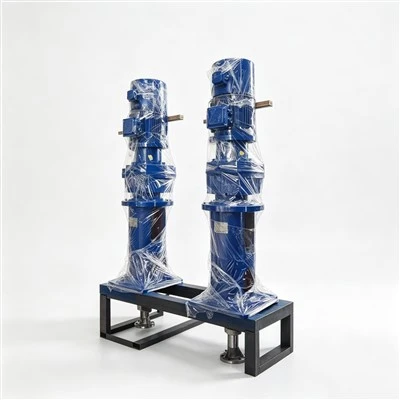
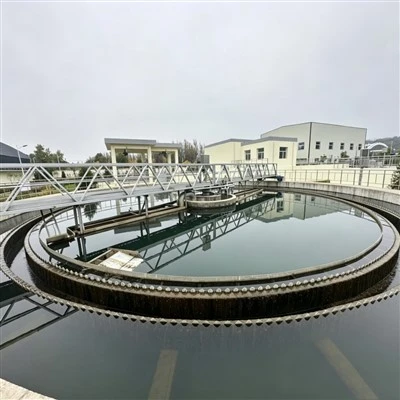
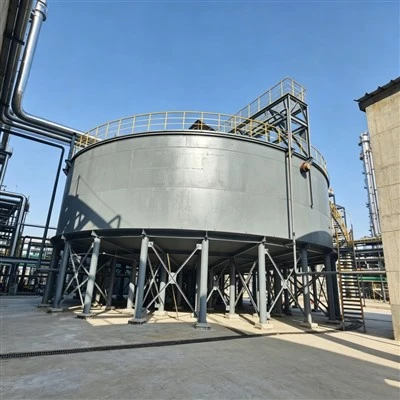
Under standard normal operating circumstances, the Wastewater Treatment Sludge Scraper produces very weak vibration with no visible or perceptible shaking. It delivers exceptionally high operational stability among water‑treatment equipment. Its operation will not compromise its own performance, tank‑body structures or surrounding plant environments, and it perfectly meets demands for round‑the‑clock continuous stable operation in wastewater plants.
Characterized by low‑speed and constant‑speed motion, the sludge scraper differs from high‑speed water‑treatment facilities such as pumps and blowers. Free from high‑frequency rotation, sudden impacts and drastic reciprocating movements, it is inherently immune to heavy vibration. Scraper arms and scraper blades slide evenly along tank bottoms and surfaces during operation with stable trajectories and uniform stress. The whole machine runs coherently without mechanical jitter, resonance or shaking. Merely subtle micro‑vibration from mechanical transmission exists, which is hardly detectable even during close‑range observation.
From the perspective of vibration transmission, minor micro‑vibration is confined within the equipment' s own transmission assemblies under stable operation. It will not spread outward to sedimentation‑tank structures, supporting frames or plant floors, so tank shaking and structural loosening can be avoided. Neither will it disturb the regular operation of adjacent water‑treatment devices or degrade on‑site working environments. Furthermore, vibration‑free steady operation safeguards uniform sludge‑scraping and prevents blade offset and uneven sludge removal caused by shaking.
All perceivable obvious vibration arises from abnormal external working conditions rather than regular equipment operation. Firstly, debris entanglement and component jamming result in uneven operational stress, breaking steady movement and bringing about local jitter or mild whole‑machine vibration. Secondly, heavy sludge or scale accumulated on components after long‑time service raises operational loads, unbalances rotation and triggers slight vibration. Thirdly, brief minor vibration may occur upon restart after lengthy idling or amid sudden working‑condition shifts, yet operation returns to smooth status quickly after stabilization.
These abnormal vibrations are temporary and manageable. They can be fully eliminated via simple debris removal, component cleaning and regular startup routines instead of developing into persistent vibration faults. To sum up, the sludge scraper delivers no prominent vibration, resonance or shaking in regular service. It operates quietly and stably without vibration‑derived noise or structural wear. High‑efficiency and smooth performance can be sustained for long‑term service, suiting continuous‑operation requirements of various medium‑to‑large sedimentation tanks with low maintenance burdens and high operational reliability.