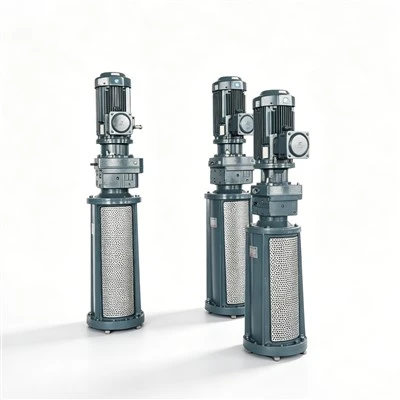
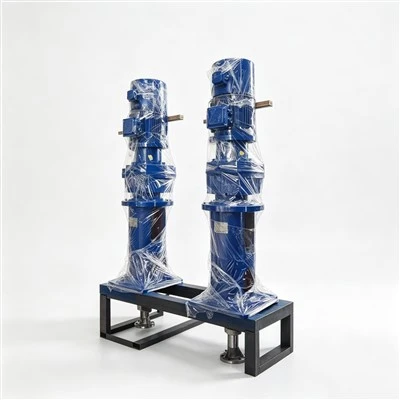
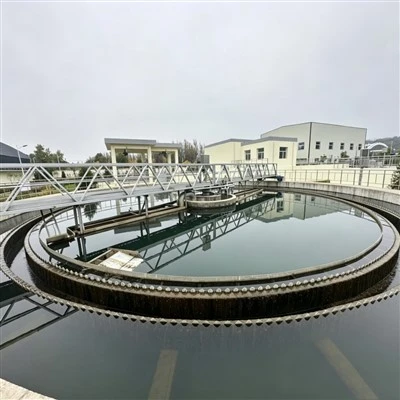
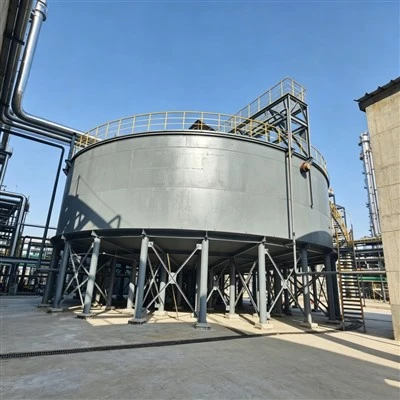
The structural design and stirring principle of the Side‑Entry Mixer fundamentally resolve the core problem of bubble entrainment. Under conventional industrial stirring conditions, the volume of bubbles generated and incorporated is far lower than that produced by top‑entry and vertical mixers, making it the preferred equipment for manufacturing high‑cleanliness, bubble‑free materials. Mounted low on the tank side wall, its stirring impeller sits fully beneath the material liquid level. During operation, the stirring shaft runs parallel to the tank's horizontal plane. Material movement relies primarily on horizontal circular flow and axial propulsion, rather than violent impact and agitation against the liquid surface. The liquid surface therefore remains stable throughout operation, completely preventing air entrainment caused by vortex suction.
By comparison, the impeller of a traditional top‑entry mixer penetrates the liquid surface. High‑speed rotation breaks the liquid surface and forms vortices, through which air easily enters the material and generates substantial bubbles. The Side‑Entry Mixer has no components that disturb the liquid surface; this constitutes its core advantage for bubble‑free stirring. Under standard operating conditions - a sealed tank, liquid level higher than the uppermost point of the impeller, rotational speed matched to material viscosity, and acceptable installation precision - zero bubble entrainment is achieved throughout stirring. This satisfies strict bubble‑content specifications for coatings, adhesives, food slurries, pharmaceutical stock solutions and other products.
Even so, the Side‑Entry Mixer is not absolutely bubble‑free. Minor bubbles may appear under abnormal working conditions, whose triggers are identifiable and avoidable. First, insufficient liquid level: if the liquid level cannot fully cover the upper edge of the stirring impeller, the rotating impeller will sit partially exposed to air, repeatedly striking the liquid surface and drawing air into the material to form dense fine bubbles. Second, improper operating parameters: for low‑viscosity water‑based materials, excessively high stirring speed creates rapid horizontal circular flow and mild turbulence at the liquid surface, causing local surface depression and trace air suction.
Furthermore, faulty equipment installation can also induce air intake. For example, an eccentric stirring‑shaft installation or loose, deformed impellers produce operating vibration that disrupts local material flow and liquid‑surface stability. Trace air may also mix with flowing material when the tank is unsealed or feeding ports remain uncovered. It should be noted that bubbles arising from these abnormal scenarios are controllable and minor, with no large‑scale foam buildup; most dissipate spontaneously shortly after shutdown.
To eliminate bubbles completely in production, supporting optimization measures may be adopted. Maintain the material liquid level consistently 30‑50 mm above the impeller; select stable low‑speed stirring for low‑viscosity materials according to their viscosity; regularly calibrate equipment coaxiality and secure impeller fasteners; deploy sealed tanks or negative‑pressure stirring modes for high‑precision production scenarios. Overall, the Side‑Entry Mixer delivers excellent native anti‑bubble performance. Only non‑standard operation produces trace bubbles, and the unit adapts to most bubble‑free stirring applications.