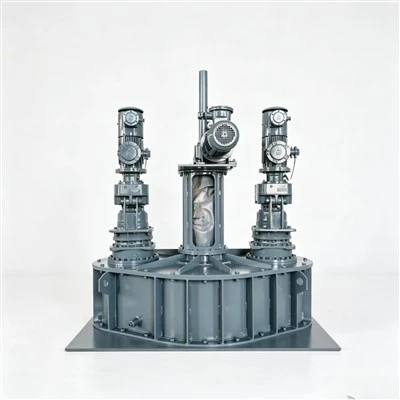
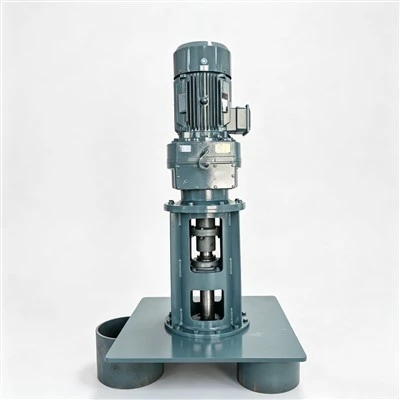
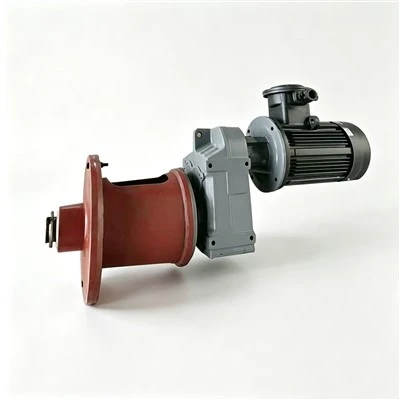
The equipment must possess excellent sealing integrity to prevent issues such as slurry leakage or water seepage. This entails addressing various aspects of the system; for instance, anti-leakage measures must be implemented at the connection points between the drive unit's base and the reducer, and the clearances of wear-prone components in various pumps must be properly adjusted. Furthermore, all lubrication points require regular cleaning and maintenance to ensure proper operation and extend the equipment's service life.
There are also stringent requirements regarding corrosion resistance-particularly for mixing applications within the chemical industry. Typically, the tank body and other components are constructed from engineering plastics or 304 stainless steel to accommodate the storage and agitation of specialized media, such as food additives, dyes, inorganic acids, bases, and salts. It is crucial to note that when selecting equipment, one must choose materials for both the main unit and its accessories that are compatible with the specific characteristics of the media being handled. Moreover, prior to use, these components must undergo proper processing and finishing to minimize dimensional tolerances and reduce the risk of damage. Additionally, special attention must be paid to the adhesion and structural integrity of any anti-corrosion coatings to ensure they do not delaminate. This guarantees that the overall structure remains intact against external mechanical forces, thereby preventing leakage accidents-which could otherwise compromise production efficiency or even endanger personnel safety-making this a critical performance requirement.