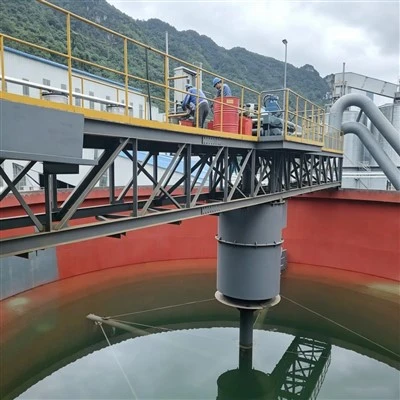
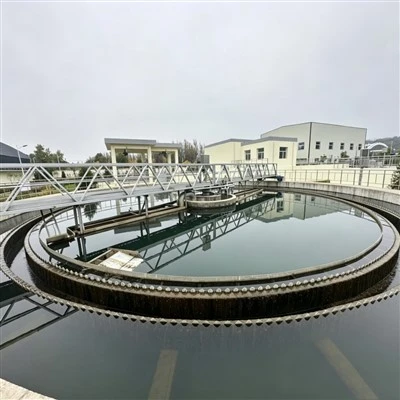
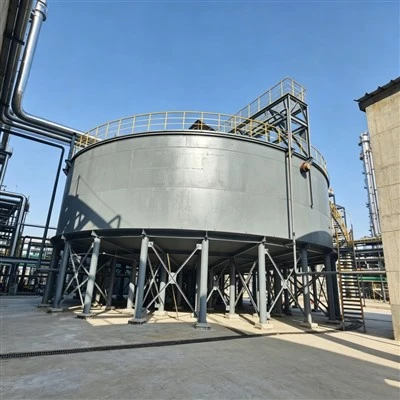
The Clarifier Thickener achieves stable and efficient solid-liquid separation primarily based on two core conditions: the physical principle of density difference and optimized structural design for stable operational conditions. It completes precise solid-liquid separation through pure physical methods without external pressure, filter consumables or chemical additives, delivering stable and long-lasting separation performance suitable for continuous long-term industrial operation.
Firstly, the density difference between solid and liquid constitutes the fundamental basis for separation. In all treatable solid-liquid slurries, the physical density of solid particles is significantly higher than that of water, which serves as the essential prerequisite for natural sedimentation and separation. According to gravitational physical principles, substances with different densities stratify independently in static mixed materials. Solid particles subjected to greater gravitational force than water buoyancy and flow resistance settle continuously and uniformly, while low-density water remains in the upper layer, establishing the physical foundation for solid-liquid separation.

Secondly, the extreme static sedimentation environment created by the equipment's exclusive structural design is the key guarantee for high separation efficiency. Ordinary static water tanks suffer from incomplete particle sedimentation and ambiguous stratification due to feeding impact and water turbulence, a problem fully resolved by the optimized structure of the Clarifier Thickener. Equipped with a central buffer feeding structure, the equipment buffers material flow velocity and eliminates inlet flow kinetic energy, preventing high-speed water flow from disrupting water body stability and enabling uniform material distribution across the entire tank. Meanwhile, the large-capacity and wide-cross-section tank structure greatly extends the static residence time of materials, providing sufficient sedimentation cycles for fine suspended particles and allowing ultra-fine particles that are difficult to settle naturally to sink completely, thoroughly avoiding incomplete separation and turbid effluent caused by water turbulence.
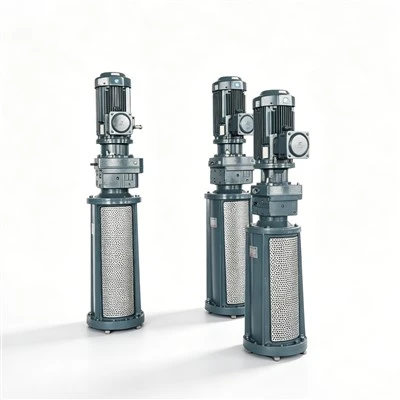
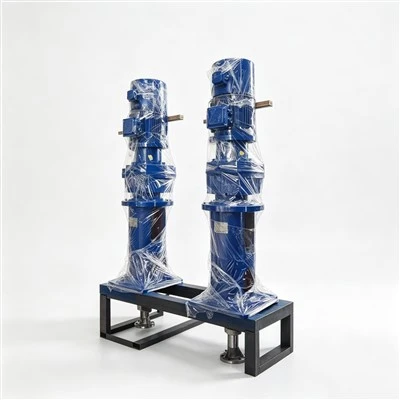
Furthermore, the layered spatial structure enhances the overall solid-liquid separation effect. During operation, a stable three-layer structure forms inside the tank: an upper clear water clarification layer, a middle suspended sedimentation layer, and a bottom sludge enrichment layer. The upper layer produces impurity-free clear water for direct overflow and recovery; particles in the middle layer settle continuously to supplement the bottom sludge layer; solid particles in the bottom layer are continuously compacted and enriched, forming a clear solid-liquid boundary and realizing passive, continuous layered separation. This separation method offers higher precision and clearer effluent quality compared with instantaneous filtration. Finally, the mechanical auxiliary structure forms a complete closed-loop separation system to ensure continuous and stable operation. Pure natural sedimentation can only achieve stratification without automatic sludge discharge. The low-speed rotating rake frame of the equipment collects and conveys compacted bottom sludge to the underflow outlet without disturbing the upper water stratification structure, enabling continuous solid material discharge. Upper-layer clear water is evenly discharged through the overflow port, forming a two-way flow state in which solids sink and are collected for discharge while clean water rises and overflows. This upgrades static layered separation to dynamic and continuous solid-liquid separation. In conclusion, the solid-liquid separation capability of the Clarifier Thickener is realized through the coordination of multiple functional conditions. Based on the natural physical density difference, the equipment adopts optimized structural design to build a stable sedimentation environment and realizes continuous material diversion via mechanical auxiliary sludge discharge. The synergistic effect delivers efficient, stable and durable solid-liquid separation. The entire process adopts pure physical operation with no material loss or secondary pollution, fully adapting to long-term continuous industrial separation applications.