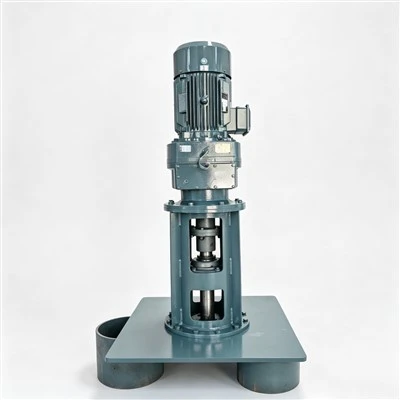
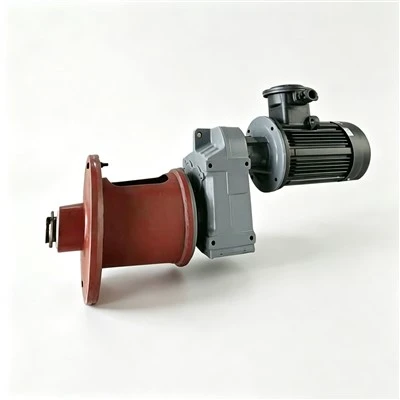
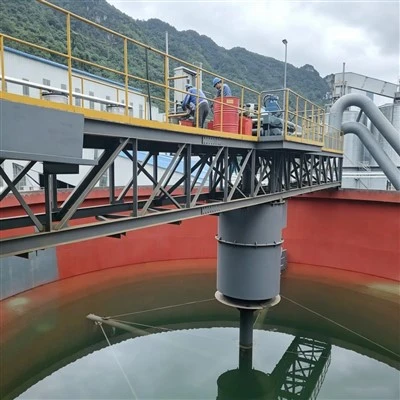
When the Wastewater Treatment Sludge Scraper runs continuously under regular working conditions, stubborn and thick attachments are unlikely to form on its surfaces. Only an extremely thin water film appears instead of accumulated sludge, limescale or microbial colonies. Components can stay relatively clean over long‑term service and sustain sound working performance. The generation of attachments hinges largely on equipment operating status, tank‑internal water quality and working scenarios, and dynamic operation acts as the core factor inhibiting attachment buildup, which constitutes a vital feature adapting the sludge scraper to wastewater environments.
Operating persistently at low speeds, all wetted components such as scraper arms, scraper blades and main shafts maintain dynamic frictional contact with flowing water and settled sludge. Such non‑stop dynamic working continuously scours equipment surfaces and blocks the adsorption, accumulation and scaling of sludge particles, water‑suspended solids and microbial colonies. Smooth surface textures also prevent viscous sludge and fibrous impurities from clinging physically, substantially lowering the probability of attachment buildup. No massive sludge or scale accumulation occurs even after prolonged operation.
Attachments mostly come into being under abnormal equipment operation. To begin with, long‑term shutdown and idling submerge static components in wastewater. Sludge particles, colloidal substances and microbes in water will gradually adsorb onto equipment surfaces, accumulating and solidifying into viscous sludge layers and biofilms. Extended static immersion further hardens these layers into scale‑like attachments. Besides, attachments may slowly build up even during equipment operation when water quality fluctuates sharply with elevated organic content, oil stains and colloidal impurities that boost substance adhesiveness.
Additionally, unbalanced pH values inside sedimentation‑tank water, excessive microbial reproduction or residual tank‑bottom sludge left uncleaned for a long time can accelerate attachment formation and accumulation on equipment surfaces. These attachments result from harsh working conditions and idling rather than material flaws or operational defects of the equipment itself, and they develop slowly without hampering equipment operation within a short time. Compared with static water‑treatment devices, the sludge scraper delivers prominent merits via dynamic operation and eliminates over 80 % of potential attachment buildup from the source.
In daily application, attachments can be removed effortlessly through simple surface flushing or wiping as long as continuous regular operation is maintained and lengthy static idling is minimized. Even occasional hardened attachments are easy to clear away. They will not corrode equipment, hinder component movement or degrade sludge‑scraping efficiency. Overall, the sludge scraper boasts outstanding anti‑attachment capacity and fits diverse complex wastewater working scenarios. Frequent cleaning and maintenance are unnecessary, and stable and clean operation can be sustained for extended durations.