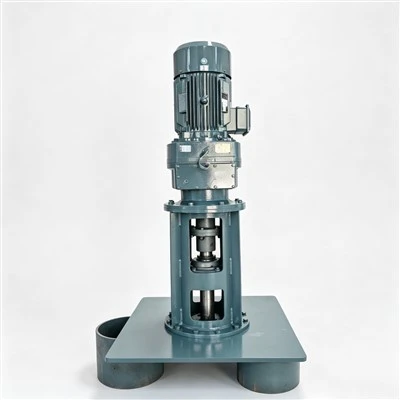
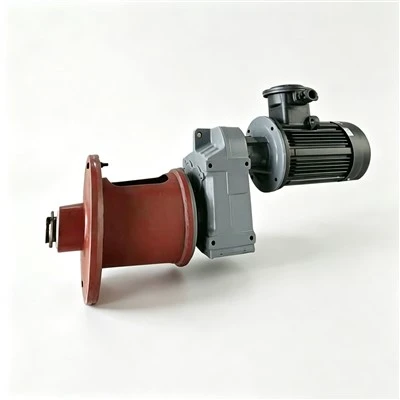
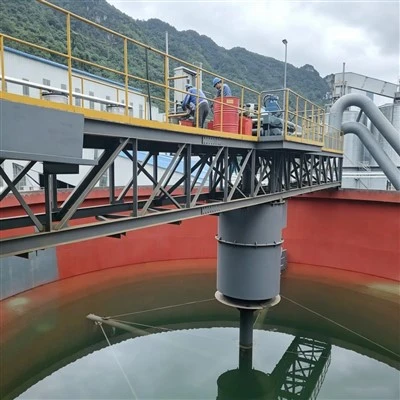
Thickeners are widely utilized across numerous industries; their primary function is to facilitate solid-liquid separation and material concentration, thereby enhancing process efficiency and resource utilization. In the mining sector, thickeners are extensively employed for tailings treatment, concentrate thickening, and the dewatering of mineral processing slurries. By processing tailings through thickeners, not only is the land area required for tailings ponds significantly reduced, but process water can also be recovered and recycled, thereby minimizing water resource waste. In the beneficiation of non-ferrous metals, ferrous metals, and precious metals, thickeners concentrate mineral slurries to a pumpable consistency, thereby boosting the efficiency of downstream filtration, drying, or smelting processes.
In the metallurgical industry, thickeners are primarily used for separating leach solutions from solid particles, settling red mud, and treating oxidation slag. Particularly in hydrometallurgical processes, the thickener has become an virtually indispensable piece of equipment. It effectively separates leach solutions from solid residues, thereby increasing metal recovery rates and alleviating the environmental burden associated with wastewater discharge. Furthermore, in steelmaking, bauxite processing, and chemical metallurgy, thickeners are frequently used to classify and concentrate high-density slurries, providing a stable material feed for subsequent dewatering or filtration stages and boosting overall production efficiency.
In the fields of environmental protection and water treatment, the application of thickeners is equally vital. They are widely utilized in municipal sewage treatment plants, industrial wastewater treatment systems, and for sludge thickening in industries such as papermaking, pharmaceuticals, and food processing. Thickeners effectively concentrate low-density sludge or slurries containing suspended solids, thereby reducing the required footprint and creating favorable conditions for subsequent dewatering, filter pressing, or anaerobic digestion processes. This not only improves the efficiency of wastewater treatment but also lowers operating costs while reducing energy consumption and the usage of treatment chemicals. Concurrently, thickeners play an irreplaceable role in the treatment of landfill leachate, powder recovery, and various environmental protection projects.
As industrial technology continues to advance, the scope of thickener applications is constantly expanding. For instance, in industries such as chemicals, food, and pharmaceuticals, thickeners can be utilized to uniformly concentrate slurries or suspensions, thereby enhancing the efficiency of subsequent processing or drying operations. In the new energy sector-specifically in the processing of lithium-ion battery materials-thickeners are also increasingly being employed to dewater and concentrate slurries, facilitating the efficient production of high-value-added materials.