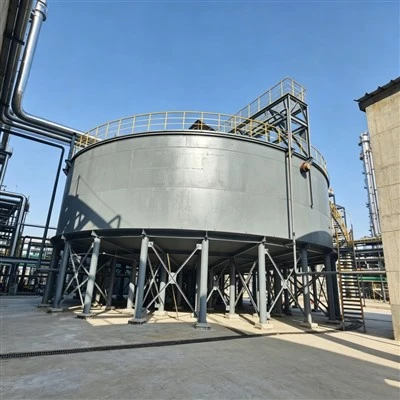
Vertical Mixers
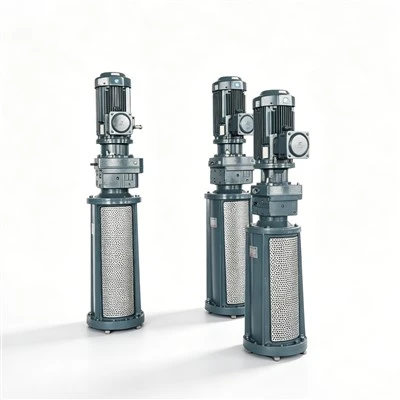
Vertical mixers are among the most common types of industrial mixing equipment; their mixing shafts are mounted vertically, making them suitable for blending liquids or materials with low to medium viscosity. Depending on the impeller design, they can be categorized into paddle, turbine, and helical ribbon types, among others. Vertical mixers facilitate excellent fluid flow dynamics and are well-suited for multi-stage mixing and jacketed temperature control designs; they are frequently employed in the chemical, food, and pharmaceutical industries for homogenization, emulsification, and reaction processes.
Horizontal Mixers
Horizontal mixers feature a horizontally oriented mixing shaft, making them ideal for blending slurries, pastes, and solid-liquid mixtures. Common configurations include horizontal helical ribbon mixers and horizontal anchor mixers, which effectively drive material flow along the length of the tank to achieve uniform blending of high-viscosity materials. Horizontal units can also be utilized for heating or cooling applications and are commonly found in the food, pharmaceutical, chemical, and paper industries.
High-Shear Mixers
High-shear mixers utilize a rapidly rotating shear impeller to subject materials to intense shearing and mixing forces, enabling the rapid breakdown of liquid droplets, emulsification of oil-water systems, and dispersion of solid particles. This type of equipment is suitable for processing emulsions, coatings, inks, cosmetics, and pharmaceutical formulations, effectively reducing mixing times while enhancing uniformity and fineness.
Conical Mixers
Conical mixers are typically used for blending powders, granules, and low-viscosity slurries; the rotating mixing shaft causes materials to rise along the conical wall and then cascade downward, thereby achieving uniform turnover and blending. Because the materials are subjected to relatively low shear forces during the mixing process, conical mixers are particularly well-suited for handling fragile, heat-sensitive, or high-value powders-such as pharmaceutical raw materials, food powders, and specialty chemical powders.
Planetary Mixers
In a planetary mixer, the mixing blades rotate around their own axes while simultaneously orbiting around the central axis of the mixing vessel, generating a complex flow pattern akin to planetary motion. This design enables highly uniform blending of high-viscosity materials, pastes, and solid-liquid mixtures. They are frequently utilized in the processing of sealing compounds, wear-resistant slurries, adhesives/sealants, and high-viscosity food products.