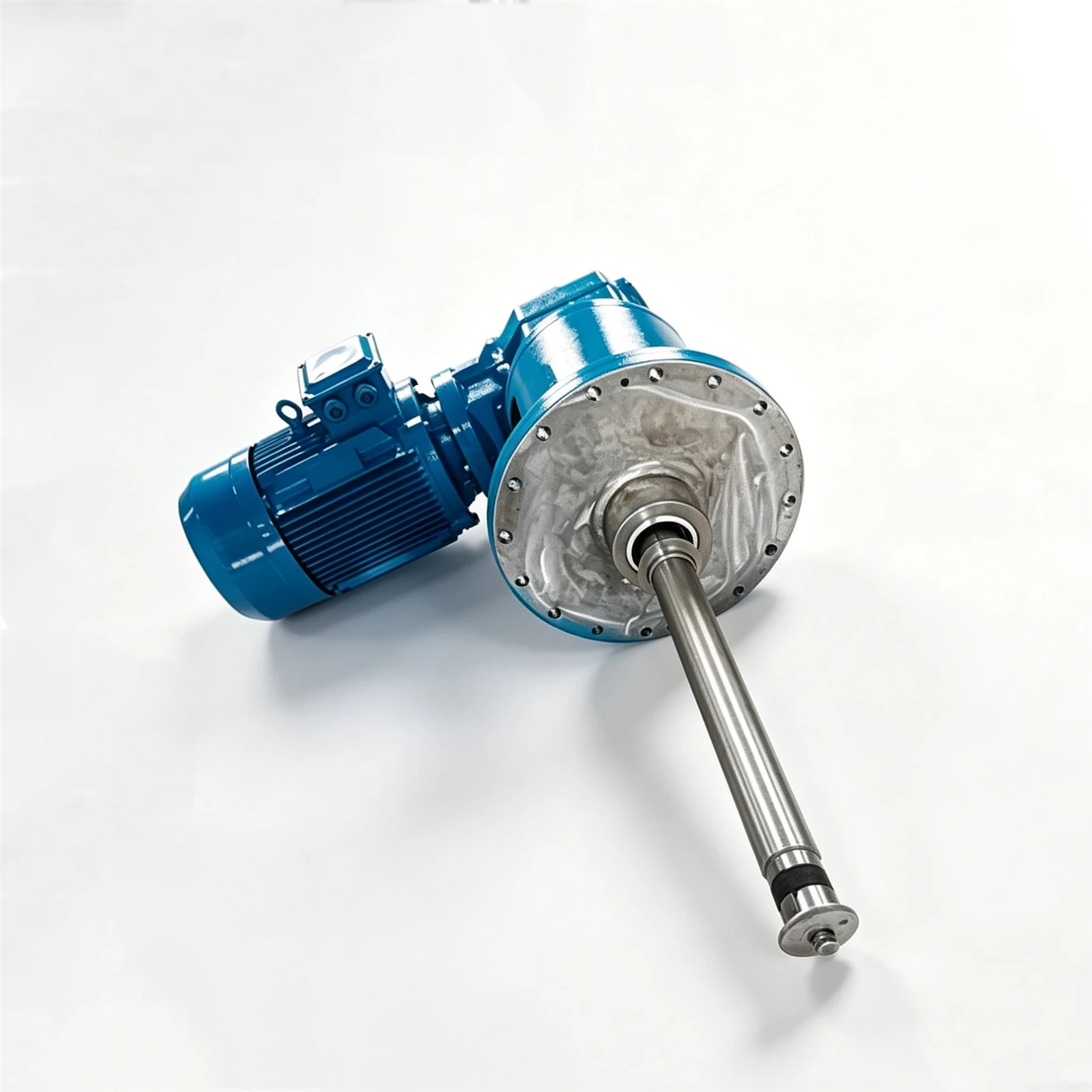
Whether a Side-Entry Mixer is suitable for high-viscosity materials cannot be determined based solely on the fact that the material has high viscosity. The material's actual flow characteristics, mixing objective, solid content, and storage condition should also be considered. Compared with low-viscosity liquids, high-viscosity materials generally have greater resistance to flow, so the mixer needs to continuously create effective movement within the material.
For low-viscosity liquids with good flowability, a Side-Entry Mixer can generally create circulation relatively easily after startup. For high-viscosity materials, however, the material itself has a lower ability to flow, and the pushing action generated by the impeller must overcome greater resistance. If the mixing method is not suitable for the material characteristics, certain areas may experience noticeable movement while other areas remain insufficiently mixed.
Another characteristic of high-viscosity materials is that material exchange may occur relatively slowly. For example, some viscous liquids may develop stratification, localized concentration differences, or material buildup during storage. In such cases, simply extending the mixing time may not solve the problem quickly. More importantly, the equipment needs to create a flow pattern that is appropriate for the material so that effective material exchange can occur between different areas of the tank.
If the high-viscosity material also contains a certain amount of solid particles, the mixing process can become more complex. Solid particles may settle or may be difficult to return to circulation because of the high viscosity of the material. In such applications, attention should be paid not only to the mixing result but also to whether the equipment experiences abnormal vibration, unusual noise, or other changes in operating conditions.
Material temperature can also affect the flow characteristics of high-viscosity materials. Some materials change in viscosity as their temperature changes. When the temperature decreases, a material may become more viscous and less fluid, while an increase in temperature may improve its flowability. Therefore, if the material viscosity changes significantly with temperature during production, this change should also be considered when operating a Side-Entry Mixer.
The mixing objective is another important factor. If the main purpose is to maintain relatively uniform material conditions in a storage tank, the requirements may differ from those for rapidly mixing two or more materials. If the main purpose is to reduce sedimentation, particular attention should be paid to whether the bottom of the tank and other areas prone to material accumulation maintain adequate flow.
Therefore, it cannot be simply stated that a Side-Entry Mixer is always suitable or unsuitable for high-viscosity materials. The material's flow behavior, viscosity changes, solid content, and actual mixing objective should be considered together. If the equipment can create stable material circulation and achieve the desired mixing or sedimentation prevention effect, it may be suitable for the application.
During actual operation, if obvious stratification, localized accumulation, or insufficient mixing remains after extended operation, the material condition and equipment operating status should be checked instead of simply continuing to extend the operating time.
Overall, a Side-Entry Mixer can be used for certain high-viscosity materials, but its suitability depends on the material characteristics and actual operating conditions. For high-viscosity applications, particular attention should be paid to material flow behavior, mixing performance, and equipment operation so that the Side-Entry Mixer can provide stable and effective mixing.