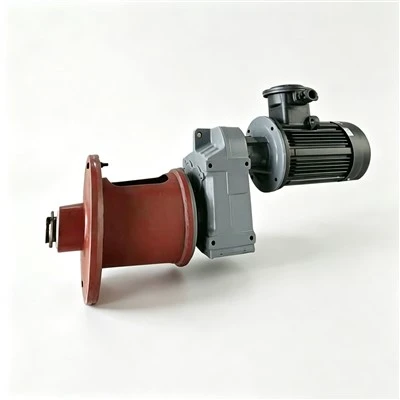
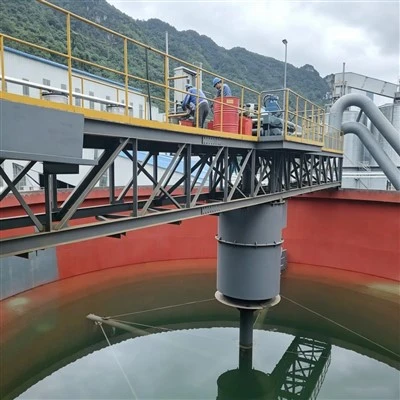
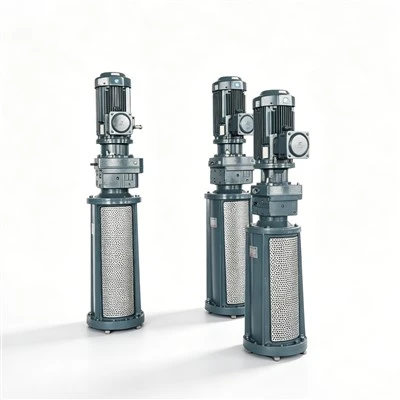
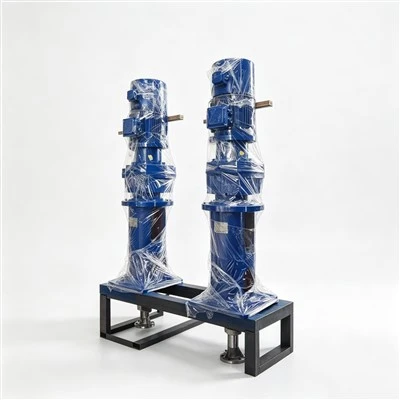
The basic working principle of a Side-Entry Mixer is to use a drive unit to rotate the mixing shaft and impeller installed inside the tank. The rotating impeller pushes the liquid and creates continuous circulation within the vessel. Because the mixing equipment is installed through the side wall of the tank, it is known as a Side-Entry Mixer. During operation, the impeller continuously transfers mechanical energy to the surrounding liquid, causing the relatively stationary material to move and circulate. This process helps achieve mixing, circulation, and sedimentation prevention.
After the equipment starts, the drive unit first rotates the mixing shaft, which then transfers the rotational motion to the impeller installed at the end of the shaft. As the impeller rotates in the liquid, it pushes the surrounding medium in a specific direction. With continuous impeller operation, part of the liquid is repeatedly moved and exchanged with material in other areas, gradually forming a continuous circulation pattern within the tank.
The primary function of a Side-Entry Mixer is not simply to make the liquid rotate in place. Instead, it creates a flow pattern that promotes the movement of liquid between different areas of the tank. If the tank contains differences in concentration, temperature, or the distribution of solid particles, continuous circulation can promote material exchange between different regions and help reduce localized variations.
For materials that are prone to sedimentation, a Side-Entry Mixer can also reduce the likelihood of solid particles remaining stationary for extended periods by continuously moving the liquid. When particles are affected by liquid flow, they can remain suspended to a certain extent, reducing the accumulation of large amounts of solid material at the bottom of the tank or basin. Therefore, Side-Entry Mixers are often used in wastewater treatment, slurry storage, and other applications involving liquids that contain solid particles and need to remain relatively uniform.
In mixing applications, a Side-Entry Mixer can promote continuous exchange between different liquids or between areas with different concentrations within the same liquid. For example, when new liquid material is added to a storage tank, the mixer can promote contact between the newly added material and the existing material. As circulation continues, the added material gradually disperses throughout a larger area, helping improve the overall mixing effect.
The actual mixing performance of a Side-Entry Mixer is related to factors such as the direction of flow generated by the impeller, the internal structure of the tank, the characteristics of the material, and the operating conditions of the equipment. Different materials have different flow characteristics. Some materials flow easily, while others may have relatively high viscosity or contain a large amount of solid particles. Therefore, the equipment should be operated appropriately according to the specific application conditions.
Side installation is also an important characteristic of a Side-Entry Mixer. After the equipment is installed on the tank wall, the mixing shaft typically extends into the tank in a specific direction, positioning the impeller inside the liquid. Compared with mixing equipment installed through the top of a tank, this installation method can be suitable for certain large storage tanks and basins and allows the impeller to directly promote material movement from the side of the vessel.
During operation, the impeller continuously rotates and pushes the liquid, causing the liquid to circulate within the tank. As this circulation continues, the material inside the tank is repeatedly redistributed, helping achieve mixing, circulation, and sedimentation prevention. Once the required mixing effect has been achieved, the equipment can be stopped according to the actual operating requirements.
Overall, the working process of a Side-Entry Mixer can be summarized as follows: the drive unit provides power, the mixing shaft transfers rotational motion, the impeller pushes the liquid, the material circulates within the tank, and the resulting flow helps achieve mixing, sedimentation prevention, and material uniformity. With proper installation and correct operation, a Side-Entry Mixer can provide stable mixing and circulation for various storage tanks, water basins, and industrial vessels.