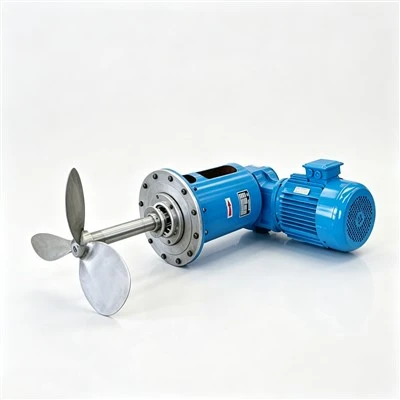
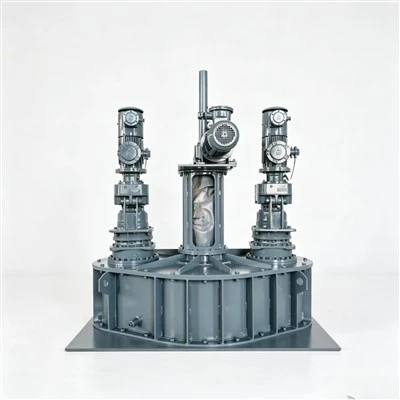
Certain noise will be generated when the Side‑Entry Mixer is running, which counts as a normal phenomenon for mechanical equipment. There exists no completely silent Side‑Entry Mixer. However, one of its core strengths lies in low‑noise performance. Compared with top‑entry and vertical mixers, it delivers lower decibel levels and more stable noise characteristics, exerting minimal influence on workshop environments and making it a favorable option for noise‑sensitive working conditions. Its noise sources are clear and controllable, mainly divided into mechanical‑structural noise and material‑agitation noise. Noise intensity varies under different working conditions and equipment statuses.
Mechanical‑structural noise constitutes the primary noise source, covering motor running sound, gear‑meshing noise of reducers, friction noise of transmission shafts and bearings, as well as rubbing noise of sealing components. Qualified brand‑new Side‑Entry Mixers undergo precise factory commissioning with well‑matched gears, smooth bearings and premium‑grade motors. Their mechanical noise sounds even and mild, normally ranging from 60 to 75 decibels, conforming to industrial environmental noise standards without harsh abnormal sounds. After long‑term service, abnormal conditions including insufficient bearing lubrication, gear abrasion, transmission shaft offset and loose fasteners will trigger sharp abnormal noise and vibration, pushing noise decibels to a much higher level.
Material‑agitation noise acts as the secondary source. When impellers rotate to stir materials inside storage tanks, flowing, collision and turbulent friction of materials will produce sound. Its intensity is fully determined by material properties. Agitation of low‑viscosity media such as clean water and solvents creates gentle flow and extremely low noise. Mixing high‑viscosity slurries and particle‑containing materials brings about slight muffled noise due to large resistance and frequent material collisions. Still, its volume is far below that of mechanical‑fault noise without harsh acoustic output.
Noise of Side‑Entry Mixers can be effectively controlled. Standard daily maintenance helps stabilize noise performance. Regularly filling bearings and reducers with special lubricant cuts down friction‑caused mechanical noise. Calibrating coaxiality of transmission shafts and tightening flange bolts eliminate resonance noise from loose assembly. Timely replacement of worn gears and sealing parts prevents abnormal fault‑related noise. Moreover, noise‑reduction accessories such as motor sound‑insulating hoods, shock‑absorbing pads and silent bearings are available upon request. These accessories can reduce operating noise by 10‑15 decibels after installation, satisfying high‑standard noise‑control demands in fine‑production workshops.
Benefiting from side‑mounted layout, short transmission shafts and robust structural stability, Side‑Entry Mixers avoid resonance noise at the source. Gears and bearings are enclosed inside housings, limiting noise propagation without extensive noise diffusion. To sum up, well‑maintained Side‑Entry Mixers deliver controllable and compliant noise levels. Excessive noise only occurs under faulty conditions, which can be avoided via routine operation and maintenance to fit noise‑reduction requirements of diverse industrial production environments.