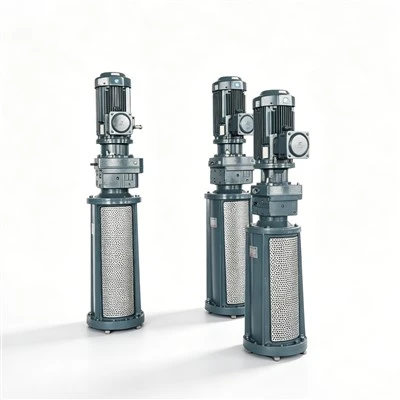
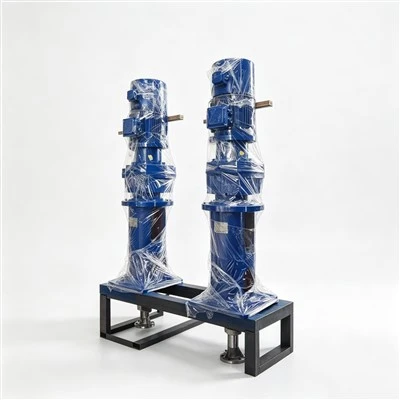
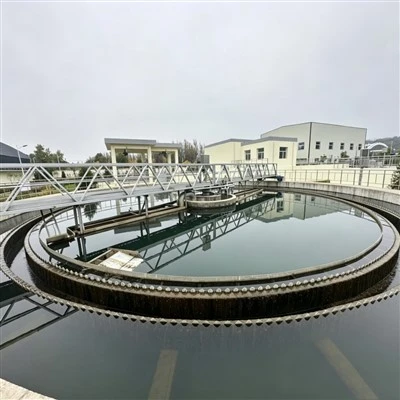
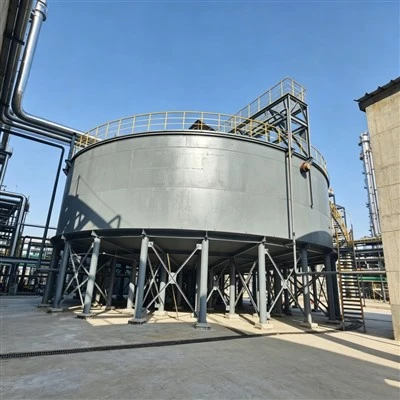
As common stirring equipment paired with industrial storage tanks and reaction kettles, the Side‑Entry Mixer features mature adjustable stirring speed, which acts as its core advantage for multi‑scenario production adaptation. The vast majority of industrial‑grade Side‑Entry Mixers on the market support speed adjustment, while only compact simple models show limitations in adjustment methods. Its speed regulation relies on supporting power control systems, and mainstream solutions fall into two major categories: frequency‑conversion speed regulation and mechanical speed regulation, catering to production demands of different scales and precision levels.
Frequency‑conversion speed regulation represents the most widely adopted solution. Equipped with variable‑frequency motors and frequency‑control cabinets, the equipment achieves stepless speed adjustment between zero and the rated rotational speed with high precision and stable performance. Operators can freely set rotational speed according to material properties, mixing processes and production phases. Smooth speed shifting takes place without stalling or impact, preventing damage to the equipment' s transmission structure and materials inside the storage tank. Targeted switching between high and low speeds can be conducted in different production stages including initial material blending, intermediate reaction and final homogenization to satisfy refined production requirements.
Mechanical speed regulation is mostly applied to small‑and‑medium‑sized simple Side‑Entry Mixers. It adjusts rotational speed via gear shifts of reducers and provides multi‑gear fixed‑speed output. Though stepless fine‑tuning is unavailable, it fulfills rotational‑speed switching for regular working conditions. Featuring a simple structure, low failure rate and reduced maintenance costs, it fits production scenarios with fixed processes and infrequent speed adjustments. Besides, some high‑end models adopt servo speed‑control systems for faster response and higher precision, suitable for high‑end manufacturing sectors such as fine chemicals and pharmaceuticals.
Side‑Entry Mixers deliver highly adaptable speed ranges. Conventional units can run at a minimum of dozens of revolutions per minute and a maximum of over one thousand revolutions per minute. Low‑speed gears are adopted for slow homogenization of high‑viscosity, sediment‑prone and stratification‑susceptible materials, avoiding splashing, bubble generation or destruction of molecular structures caused by high‑speed agitation. High‑speed gears are used for rapid blending, dissolution and homogenization of low‑viscosity liquids to greatly boost mixing efficiency. Both static and dynamic speed adjustment are supported: preset rotational speed before startup or real‑time fine‑tuning during operation for convenient and flexible manipulation.
It should be noted that speed adjustment must comply with rated parameters. Long‑term operation beyond rated rotational speed will aggravate wear on bearings, gears and transmission shafts and shorten service life. Meanwhile, sufficient motor heat dissipation shall be guaranteed under low‑speed conditions to prevent overheating induced by long‑time low‑speed and high‑load operation. In general, adjustable stirring speed frees Side‑Entry Mixers from constraints of fixed‑speed equipment. Capable of satisfying differentiated mixing techniques in chemical, petrochemical, water‑treatment, grain‑oil and other industries, it becomes the preferred stirring device for large‑capacity storage tanks.