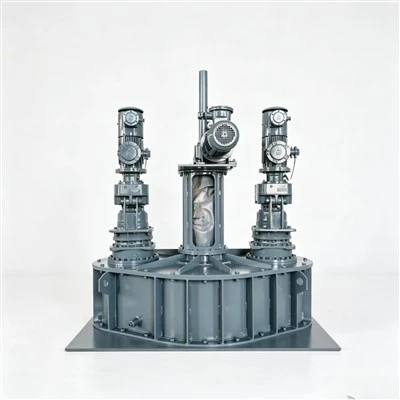
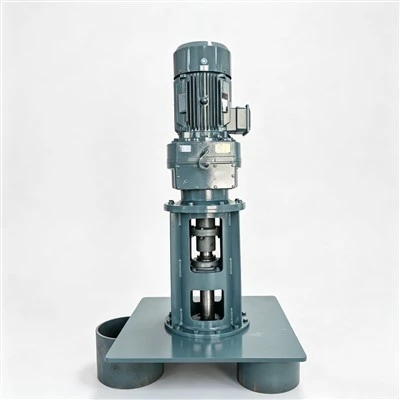
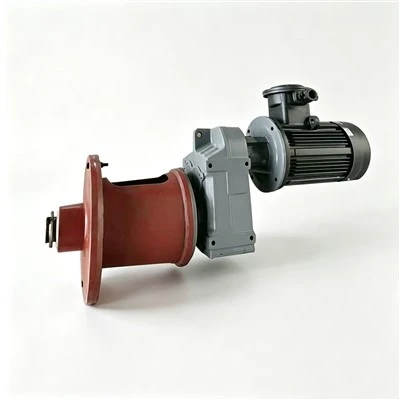
With standard working conditions, standardized operation and routine inspection, the Center Drive Sludge Scraper will not develop large-area, persistent sludge accumulation during long-term uninterrupted operation. It can keep the sedimentation tank bottom clean for extended periods and stably deliver the process benefits of sludge collection and water sedimentation, suitable for various long-term continuous operation scenarios including municipal sewage, industrial wastewater and tap water treatment.
The core working logic of this equipment is engineered to meet long-term continuous operation requirements. Adopting a central coaxial circular rotation mode, it achieves 360-degree dead-zone-free, uninterrupted and full-coverage sludge scraping across the sedimentation tank bottom. The equipment maintains a constant and uniform operating rhythm. Scraping arms and scraper blades slide smoothly along the tank bottom at all times. In each rotation cycle, newly settled sludge and existing residual sludge on the tank bottom are pushed together toward the central sludge hopper. This cycle repeats continuously, fundamentally preventing sludge sedimentation and accumulation. During long-term operation, the equipment follows fixed operating tracks and maintains full coverage. It does not create working blind zones and can dynamically balance sludge sedimentation and collection rates. Settled sludge can be removed in a timely manner and cannot form thick accumulation layers.
Minor local sludge buildup during extended equipment operation stems from external factors rather than inherent equipment operation, so this is not a normal working condition. The first scenario involves debris tangled around sludge scraping components. When aquatic plants, fibers, plastics and other debris wrap around scraper blades, component fit decreases, causing incomplete local scraping and local sludge accumulation after prolonged buildup. The second scenario is abnormal tank water working conditions. Sudden changes in influent water quality, sharp rises in sludge concentration or poor sludge settleability will make sludge sedimentation rates exceed collection rates, and a small amount of residual sludge may appear on the surface temporarily.
The third scenario is unbalanced water levels. Water levels that are too high or too low will alter the working fit of sludge scraping components, leading to incomplete scraping along edge areas and local siltation after long-term operation. The fourth scenario is the absence of routine inspection over extended periods. If sludge inside the sludge hopper is not discharged promptly, sludge overflow and backflow will occur and further trigger secondary accumulation at the tank bottom. All these issues can be fully eliminated through simple daily inspection, timely debris removal, adjustment of tank water working conditions and standardized operation maintenance.
In general, the operating structure and working principle of the Center Drive Sludge Scraper support long-term continuous work and deliver strong stability and durability. As long as no debris becomes tangled inside the tank, water working conditions remain stable and sludge discharge proceeds smoothly, the equipment will not suffer sludge accumulation or tank bottom siltation even after year-round uninterrupted operation. It can stably maintain the sedimentation tank's core benefits of high-efficiency water purification and stable sedimentation over long periods and fully meet the long-term operation requirements of various water treatment projects.