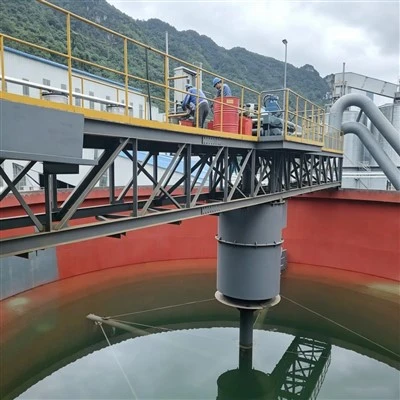
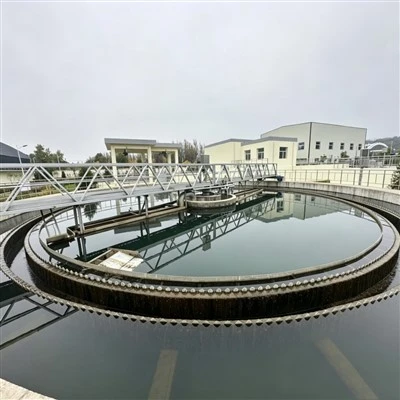
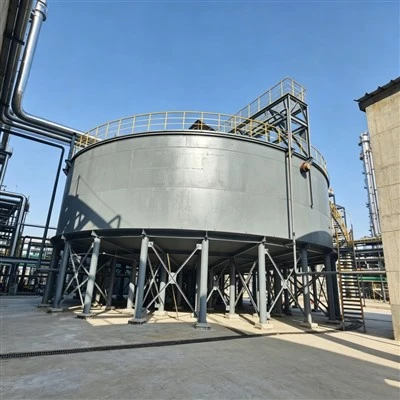
A typical thickener typically consists of several key components. First is the tank body-a large, circular or square vessel designed to contain the suspension undergoing treatment. The dimensions of the tank can be tailored to the specific processing volume, ranging from small-scale laboratory units to massive industrial installations.
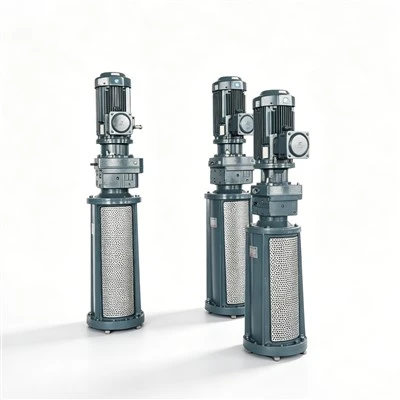
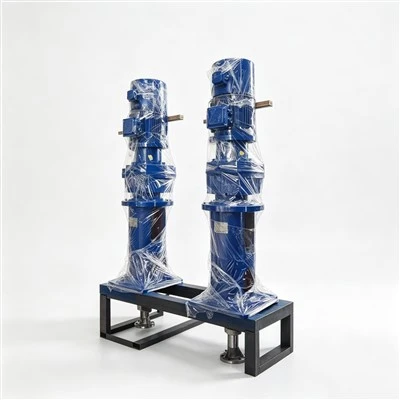
Second is the drive mechanism, which powers the rake assembly, enabling it to rotate slowly and push settled solid particles toward the central discharge port. The design of the rake assembly is critical; it must be capable of effectively conveying solids without excessively disturbing the already settled particles.
Additionally, the thickener is equipped with a feed system, an overflow system, and an underflow discharge system. The feed system is responsible for uniformly introducing the raw slurry into the equipment; the overflow system collects the supernatant liquid; and the underflow system handles the discharge of the thickened slurry. The coordinated operation of these systems ensures the continuous and stable functioning of the entire process.
A thickener, as the name implies, is a device used to increase the concentration of a suspension. Its primary function is to separate solid particles from a liquid through gravity sedimentation, thereby yielding a denser slurry or a clearer liquid. This equipment is widely utilized across industries such as mining, metallurgy, chemicals, and environmental protection-particularly in the treatment of tailings, wastewater, or process slurries.