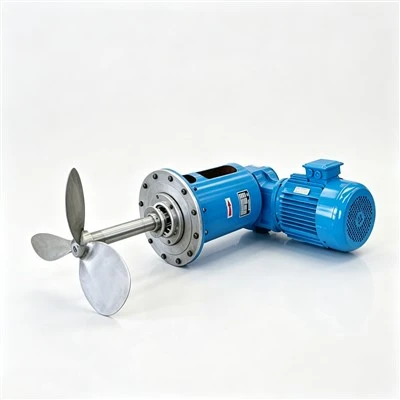
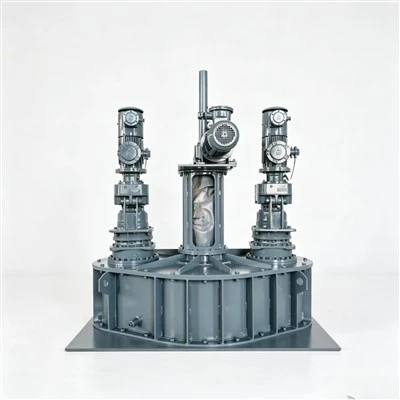
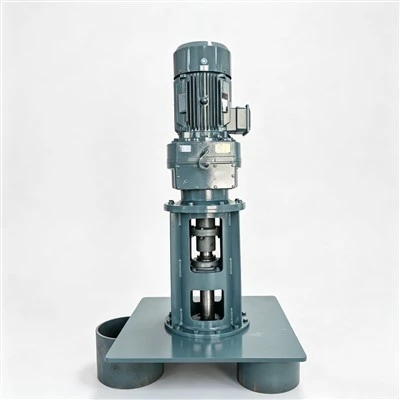
The Settling Thickener is characterized by compact structure, high land utilization rate and strong adaptability in terms of land occupation. It has obvious advantages over traditional solid-liquid sedimentation equipment and will not take up excessive factory production space. It can perfectly fit site conditions of small, medium and large factories, making it equipment with excellent site cost performance among industrial solid-liquid separation devices. Its occupied area can be flexibly adjusted according to equipment specifications and production requirements.
In terms of equipment structural design, the Settling Thickener differs from horizontal flat sedimentation tanks and square static settling ponds. It adopts a vertical circular three-dimensional structural design. Slurry sedimentation, stratification and concentration operations are completed by utilizing vertical space rather than wide horizontal ground. Traditional sedimentation facilities require huge horizontal land area to guarantee sedimentation effects and feature extremely low land utilization. In contrast, the Settling Thickener concentrates sedimentation zones inside a closed vertical tank, greatly reducing horizontal floor space and making full use of vertical space. For the same processing capacity, the Settling Thickener occupies only one fifth to one third of the land area required by traditional sedimentation tanks, which effectively saves factory land resources.
In terms of specific occupied area parameters for different specifications, the equipment can match production lines of various capacities. Mini Settling Thickeners supporting laboratories and small processing plants have a diameter of 3 to 5 meters with a total floor area of 10 to 20 square meters. They can be installed in narrow factory areas or workshop open space without separate planning of large sites. Standard equipment commonly used by small and medium mining and chemical enterprises has a diameter of 6 to 12 meters and covers about 30 to 110 square meters. It can be embedded in gaps of mid-stream production procedures without occupying core production space.
Large-capacity thickeners supporting large mines and sewage treatment plants have diameters up to 15 to 30 meters and occupy around 180 to 700 square meters. Although the land area seems large, it corresponds to ultra-high slurry throughput of hundreds of cubic meters per hour, bringing extremely low land occupation cost per unit material treated. Compared with traditional sedimentation tanks of equal processing capacity, it still has prominent advantages in land use. Moreover, large equipment can be arranged centrally in waste residue treatment and water recycling zones according to overall factory planning without interfering with operations in the main production workshop.
In addition, customized optimized design can be carried out according to actual factory site conditions to further reduce land occupation. For factories with limited space, tank height can be increased and internal flow guide structures optimized to reduce equipment diameter without lowering processing efficiency, cutting horizontal land occupation. Meanwhile, matched pipelines, control cabinets and discharge devices are integrated, requiring no extra reserved space for auxiliary facilities for compact overall installation. In some scenarios, semi-underground installation can be adopted, embedding the lower part of the equipment underground to further reduce visible ground occupation, adapting to renovation and upgrading of old factories with limited space.
Overall, the Settling Thickener does not suffer from excessive land occupation or space crowding issues. Equipment specifications can be matched for old and new factories of all capacity scales, balancing production throughput and land utilization efficiency. It is one of the solid-liquid separation equipment options with optimal site adaptability and highest land use efficiency in industrial scenarios and will not bring extra pressure of site occupation and layout transformation to factories.