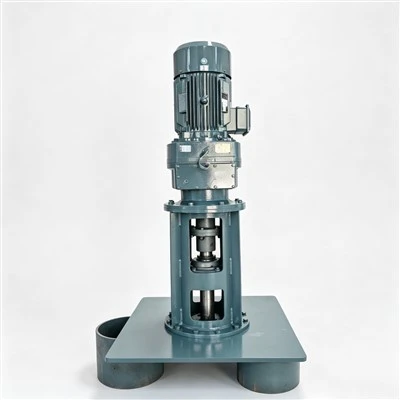
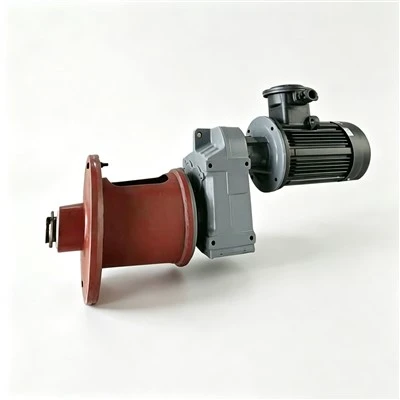
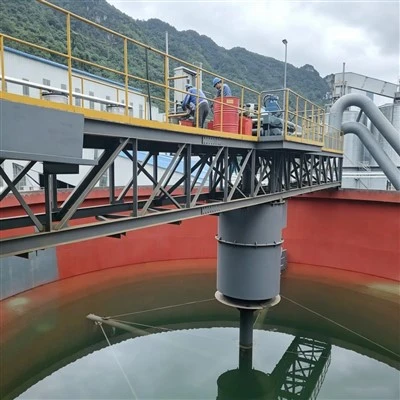
Thanks to its structural design, the Side‑Entry Mixer greatly reduces the likelihood of impeller material adhesion. Under most industrial stirring conditions, no obvious material sticking or accumulation forms on impellers after shutdown, demonstrating excellent self‑cleaning performance and placing it among agitators with strong anti‑adhesion capability. It significantly lowers costs associated with manual cleaning and equipment maintenance. Its core strengths stem from its specialised impeller configuration and operating flow‑field. Unlike the complex framed structures of anchor and frame agitators, Side‑Entry Mixers mostly employ wide streamlined propeller‑style three‑blade impellers free of splicing gaps, concave‑convex dead zones, or frame obstructions. Their smooth surfaces offer no conditions for material accumulation.
From an operating‑principle perspective, rotating impellers receive constant high‑intensity scouring and shearing across both front and rear surfaces. Under dynamic operating conditions, material cannot linger and adhere, so impeller surfaces remain clean. Immediately after stirring ceases, material inside the tank is still in motion and continues to scour impeller surfaces, removing trace attached residues and producing a natural self‑cleaning effect. Impellers of top‑entry mixers generally sit within the centre of upward‑and‑downward material convection, where solid impurities and particles readily settle and stick to impeller rear surfaces. Frame agitators suffer prominent post‑shutdown adhesion because material easily catches and accumulates within frame gaps. In comparison, the Side‑Entry Mixer exhibits remarkable advantages.

Slight impeller adhesion develops only under special material‑related conditions and remains controllable. The first category includes high‑viscosity materials such as epoxy resin, putty paste, and high‑consistency adhesives. Strong material adhesion combined with poor post‑shutdown fluidity forms uniform thin layers on impeller surfaces without caking or buildup. The second category covers high‑solid‑content granular materials including mortar, coating slurries, and powder suspensions. Fine solid particles lightly adsorb onto impeller surfaces during settling without large‑scale accumulation. The third category consists of low‑temperature easily‑solidifiable materials whose viscosity rises sharply as temperature falls, causing sticking on impellers.
It should be noted that adhesion under these special conditions forms thin, easily‑cleaned layers with no stubborn buildup or material jamming, and will not interfere with subsequent stirring cycles. Impellers remain completely residue‑free after shutdown when processing conventional water‑based solutions, oil products, dilute slurries, and low‑viscosity chemical materials. For applications with minor adhesion, thorough improvements can be achieved through simple optimisations: run low‑speed idling for 30 seconds after stirring finishes to wash away residues via material flow; perform regular on‑line flushing using water or solvent; maintain temperature for easily‑solidifiable materials to preserve fluidity.
Overall, the Side‑Entry Mixer does not suffer severe post‑shutdown impeller sticking, accumulation, or caking. Frequent disassembly for cleaning is unnecessary, supporting high operational stability. It effectively prevents failures such as uneven stirring, excessive load, and equipment wear triggered by impeller adhesion, suits continuous industrial‑production workflows, improves production efficiency, and reduces operation‑and‑maintenance costs.