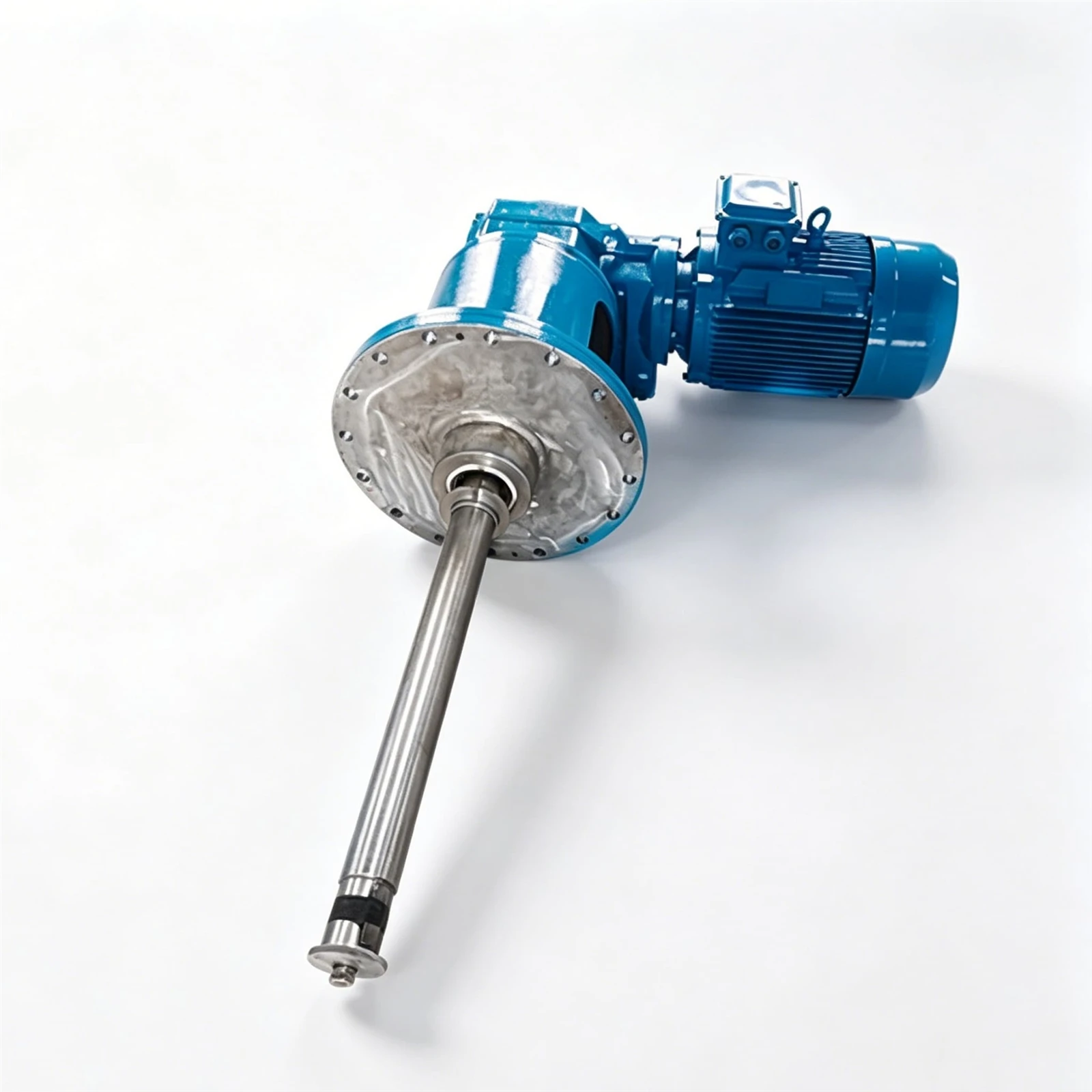
The operating time of a Side-Entry Mixer is not necessarily better when it is longer. Mixing performance mainly depends on the material properties, flow conditions inside the tank, mixing objectives, and equipment operating conditions. After the equipment starts, the impeller continuously moves the liquid, allowing materials in different areas to exchange gradually. Once the material has reached a relatively uniform condition or the required sedimentation prevention effect has been achieved, continued operation generally does not provide an improvement proportional to the additional operating time.
For applications involving the mixing of different liquids, there may be significant concentration differences between different areas of the tank at the beginning of operation. As the Side-Entry Mixer continuously circulates the material, newly added material gradually disperses into other areas, and the overall degree of mixing improves. However, once the materials have been sufficiently exchanged, continued mixing mainly maintains circulation within the tank rather than continuously improving the degree of mixing.
For materials that are prone to sedimentation, the purpose of a Side-Entry Mixer may not be to complete the mixing process once and for all, but rather to maintain the material in a relatively uniform and flowing condition. If the equipment remains stopped for too long, some solid particles may gradually settle. Therefore, the operating method should be determined according to the actual application. Some applications may require continuous operation, while others may be suitable for intermittent operation, in which the mixer runs periodically to reduce sedimentation.
Operating time is also related to the characteristics of the material itself. Liquids with good flowability can generally circulate relatively easily, while materials with higher viscosity, a higher solid content, or a greater tendency to stratify may require more time to mix. Therefore, simply extending the operating time cannot solve every mixing problem. If obvious stratification or sedimentation remains after extended operation, the material condition, equipment operating status, and flow conditions inside the tank should be checked.
Longer operating times also mean longer energy consumption. For continuously operating production systems, attention should be paid to the equipment's operating condition after the required mixing effect has been achieved. If the material has already reached the desired level of uniformity but the mixer continues to operate unnecessarily, energy consumption may increase without providing a significant improvement in mixing performance.
During actual operation, an appropriate operating time can be established by observing the material condition, sedimentation, and equipment performance. For newly commissioned systems, the operating time can be adjusted according to the observed mixing results and actual production requirements. Over time, these observations can be used to establish a relatively stable operating method.
Overall, the operating time of a Side-Entry Mixer should be based on the actual mixing objective rather than simply maximizing operating duration. A reasonable operating method can help maintain material uniformity and reduce sedimentation while avoiding unnecessary energy consumption and helping the equipment operate reliably.