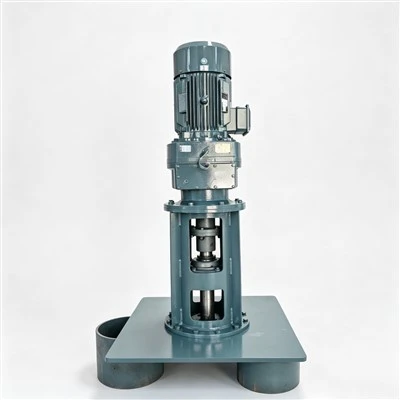
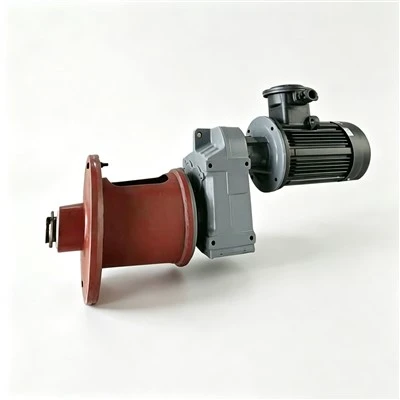
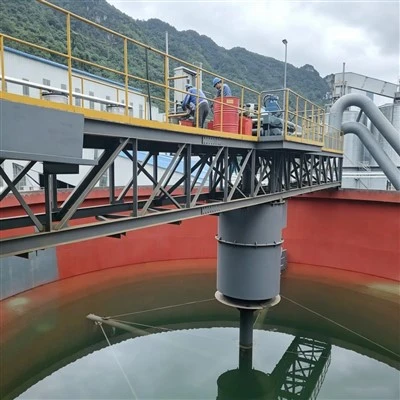
A core conclusion shall be clarified first: the mechanical operation, transmission structure and overall working state of the Sewage Treatment Scraper Machine are completely immune to conventional water‑quality changes. Slight fluctuations in conventional sewage indicators such as COD, ammonia nitrogen and turbidity will not cause equipment shutdown, stalling, damage or operational failure. As a purely mechanical auxiliary device, the scraper machine is driven solely by motors, reducers and transmission travelling mechanisms. All metal structures, anti‑corrosion components and walking parts undergo professional anti‑corrosion, waterproof and anti‑fouling treatment. Without precision‑sensing components, the equipment maintains stable mechanical performance under routine water‑quality fluctuations and boasts excellent working‑condition adaptability.
The so‑called "equipment failure caused by water‑quality changes" perceived by operators is essentially a change in sludge characteristics induced by fluctuating water quality that weakens scraping performance, which belongs to process‑adaptation problems rather than inherent equipment faults. In actual sewage‑treatment scenarios, drastic water‑quality fluctuations affect scraping efficiency in several typical ways. First, sudden rises in influent sludge concentration and suspended solids lead to a sharp increase in sedimentary sludge, exceeding the conventional processing load of the scraper machine. Although the equipment still operates normally, its limited unit‑time scraping capacity cannot eliminate the soaring sludge in a timely manner, resulting in sludge accumulation and incomplete cleaning, which is easily misjudged as equipment failure.
Second, sewage containing excessive grease, colloids and viscous impurities will greatly increase sludge viscosity and weaken flocculation performance, forming loose sludge with strong adhesion. Conventional operation of the Sewage Treatment Scraper Machine struggles to push such viscous sludge smoothly, causing sludge adhesion on scrapers, incomplete sludge removal and local sludge deposition, which significantly reduces scraping uniformity and cleaning efficiency. Third, extreme pH fluctuations and enhanced water corrosivity will gradually erode the surface anti‑corrosion layer of the equipment over long‑term operation and shorten service life, though they exert no short‑term impact on normal operation. Fourth, high‑turbidity sewage containing abundant hard sediment particles accelerates wear on scrapers and walking parts, indirectly affecting long‑term equipment operation.
In addition, low temperature and high organic content will accelerate anaerobic fermentation of sludge and increase floating‑sludge volume, raising the operating pressure and slightly reducing the cleaning precision of the scraper machine. By contrast, minor daily fluctuations in COD, water volume and sludge concentration have no impact on equipment operation and scraping effect at all. No equipment replacement is required to adapt to fluctuating water quality; simple operational adjustments are sufficient. Operators can extend operating duration and reduce running speed to improve cleaning thoroughness when water quality deteriorates and sludge accumulates; regularly clean adhesive impurities on scrapers for smooth operation under oily and viscous water conditions; and strengthen equipment inspection and anti‑corrosion maintenance under extreme working conditions. In summary, the mechanical performance of the Sewage Treatment Scraper Machine is unaffected by water quality, and all fluctuations in scraping effect under extreme water quality can be eliminated through standardized maintenance and operational adjustments.