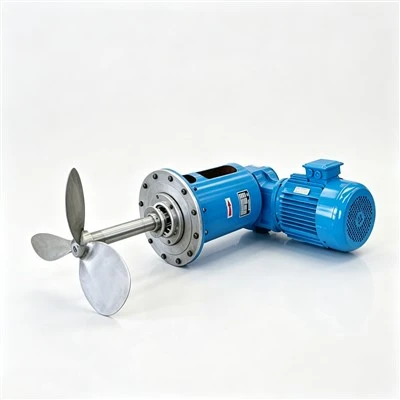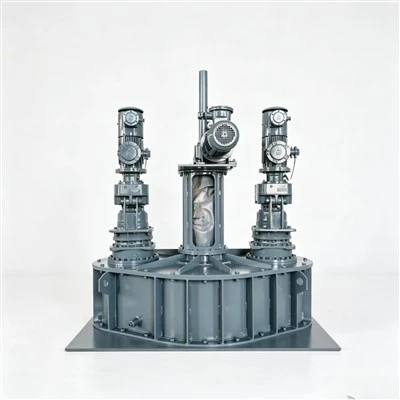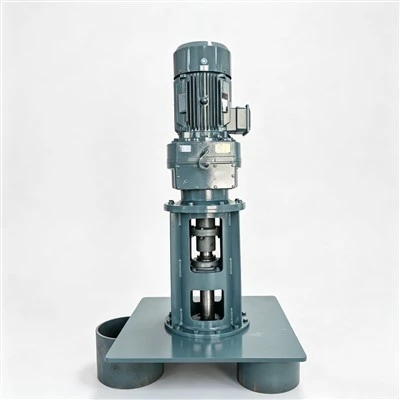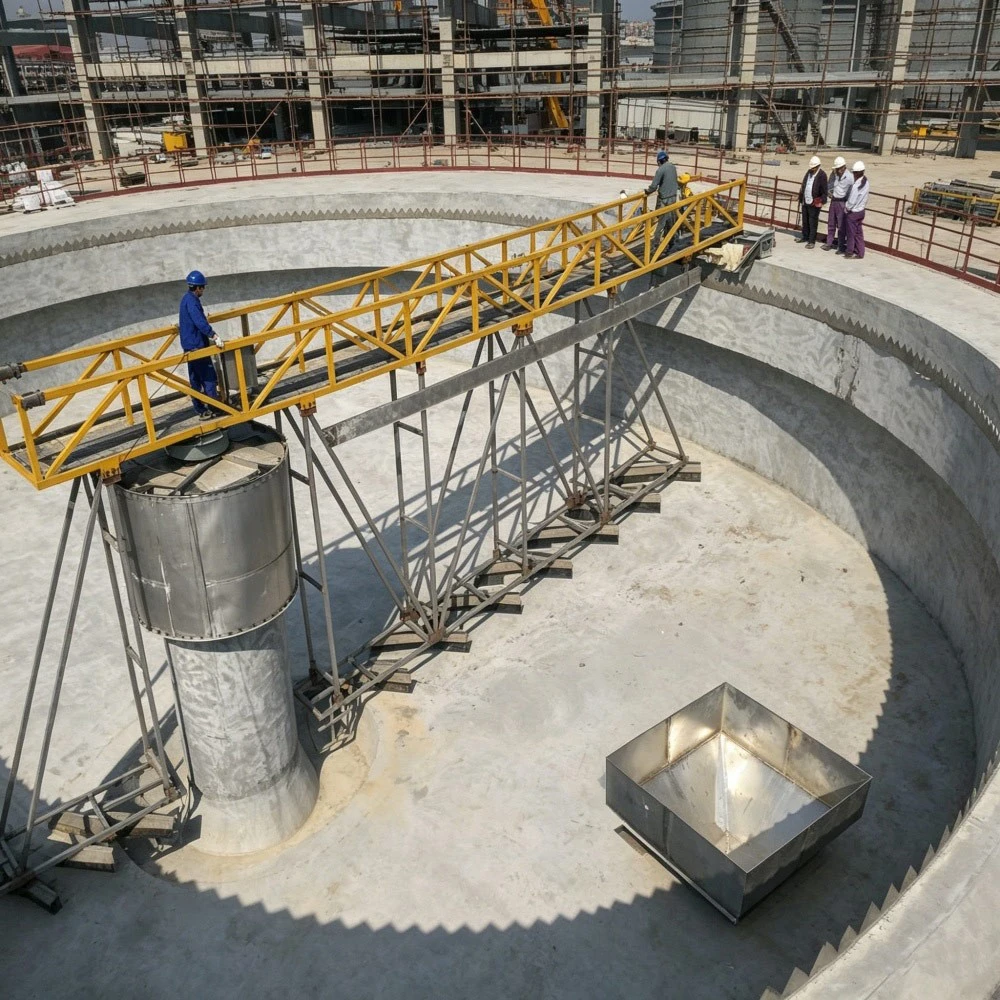

If a Sedimentation Tank Sludge Scraper experiences sticking, intermittent movement, abnormal speed, vibration, or unusual noise during operation, several factors may be responsible. Rather than assuming that a single component is defective, operators should inspect the equipment condition, the inside of the sedimentation tank, and the sludge condition as a whole.
First, check whether there are foreign objects inside the sedimentation tank. During wastewater treatment, debris may enter the tank. If a relatively large foreign object enters the operating area of the scraper, it may obstruct the scraper blades or other moving components and affect normal operation. Therefore, if the equipment suddenly begins to stick or encounters increased operating resistance, the tank should be checked for objects that could interfere with movement.
Second, the condition of the scraper blades should be inspected. The scraper blades are important components that directly collect settled sludge. If they become deformed, loose, worn, or improperly positioned, they may create additional resistance during operation and affect equipment performance. In addition, excessive sludge or debris attached to the scraper blades may reduce scraping effectiveness. Therefore, the overall condition of the scraper blades should be checked during routine inspections.
The moving and drive components should also receive particular attention. After long-term operation, mechanical components may experience wear, looseness, or inadequate lubrication. If the resistance of these components increases, the Sedimentation Tank Sludge Scraper may operate unevenly. Therefore, when unusual operating noise or noticeable vibration occurs, the relevant components should be inspected promptly.
Excessive sludge accumulation at the bottom of the tank may also affect equipment operation. If sludge is not removed in a timely manner, the sludge layer may become increasingly thick, increasing resistance during scraping. This can be particularly noticeable when the sludge is relatively sticky or has remained at the bottom for an extended period. Therefore, sludge removal should be scheduled appropriately according to actual sludge generation and accumulation conditions.
The sludge removal process should also be checked. If the Sedimentation Tank Sludge Scraper successfully moves sludge toward the sludge collection area but the sludge cannot be removed efficiently, the sludge may accumulate again. This can increase the operating load of the equipment. In such cases, inspecting the scraper alone may not solve the problem. The downstream sludge removal process should also be checked to ensure that sludge can be discharged properly.
Uneven operation may also be accompanied by abnormal noise, noticeable vibration, or changes in the scraper's normal movement path. Different symptoms may have different causes. Therefore, when a problem occurs, it is useful to record when the abnormality appeared, the operating condition of the equipment, and the sludge condition inside the tank. These observations can help identify the underlying cause more accurately.
Safety should always be considered during inspections. A Sedimentation Tank Sludge Scraper is mechanical equipment with moving components, so personnel should not directly touch moving parts while the equipment is operating. When inspection, cleaning, or maintenance is required, the applicable safety procedures at the site should be followed.
Overall, uneven operation of a Sedimentation Tank Sludge Scraper may be related to foreign objects, scraper blades, drive components, excessive sludge accumulation, or problems with the sludge removal process. By systematically checking the equipment and tank conditions, operators can identify the likely cause more accurately and take appropriate measures to prevent abnormal operation from continuing to affect equipment performance.