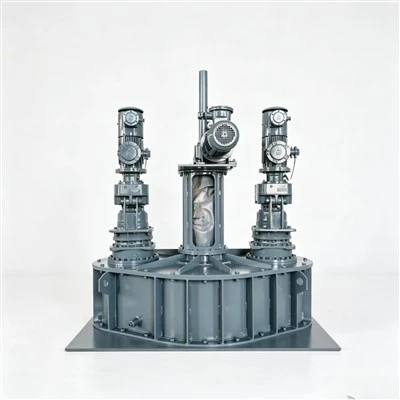
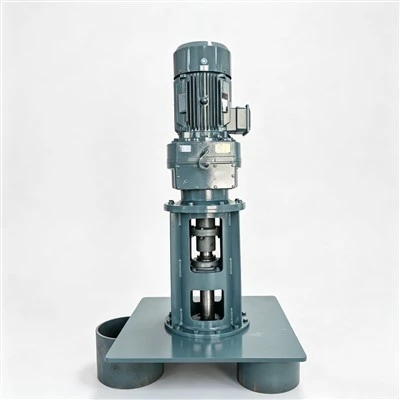
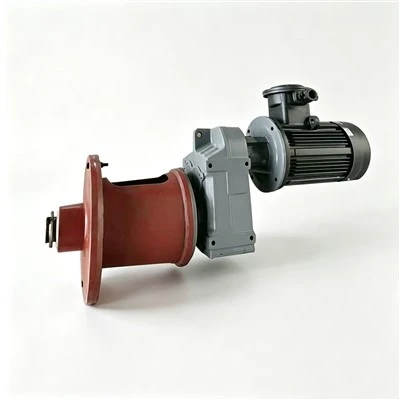
A side-entry agitator is a piece of equipment installed on the side wall of a storage tank. It uses a shaft and impeller to drive liquid movement and is primarily used for liquid circulation, material mixing, homogenization, and sediment control. Due to its installation design and operating principle, it is used in various industrial storage tanks and liquid handling applications. Its suitability depends on liquid properties, tank structure, and production process requirements.
First, side-entry agitators are commonly used in the petroleum and related industries. During oil storage and processing, some liquids may develop uneven composition, localized sediment accumulation, or temperature differences after prolonged periods of inactivity. By using an impeller to circulate the liquid, a side-entry agitator promotes material exchange between different areas of the tank and helps maintain a more uniform liquid state. Under suitable operating conditions, it can also reduce the accumulation of certain substances that tend to settle at the bottom, providing more consistent material conditions for subsequent transfer and processing.
Second, the chemical industry is another important application area for side-entry agitators. During the storage of chemical raw materials, handling of intermediate liquid products, and certain production processes, liquids may need to maintain a consistent composition to meet the requirements of subsequent batching, transfer, or processing operations. A side-entry agitator promotes liquid movement within the tank, reduces localized concentration differences, and helps improve overall material distribution. For chemical liquids that are corrosive, volatile, or have other special properties, the compatibility of equipment materials, sealing structures, and operating methods should be evaluated to ensure safe and reliable operation.
Third, side-entry agitators can be used in certain wastewater treatment and industrial effluent treatment applications. In some treatment facilities, liquids may contain suspended particles or solids that tend to settle. If the liquid remains stagnant for extended periods, these substances may gradually accumulate at the bottom of a tank or basin, affecting subsequent treatment and cleaning operations. Proper agitation promotes liquid circulation, improves suspended solid distribution, and can slow sediment accumulation under suitable conditions. However, when a process requires solid-liquid separation or sedimentation, the equipment and operating method should be selected according to the treatment objectives to avoid disrupting the process.
In addition, side-entry agitators are suitable for circulation and homogenization in certain industrial liquid applications. For example, some liquid raw materials require periodic agitation during storage to reduce localized concentration changes or stratification. By promoting liquid movement throughout the tank, the equipment encourages material exchange between different areas and helps maintain a relatively uniform liquid state before the next production stage. This can be beneficial for processes that require consistent raw material conditions.
Side-entry agitators may also be used with liquid mixtures containing suspended particles. In certain industrial slurries and liquids containing solid particles, appropriate agitation helps keep particles suspended and reduces sedimentation and localized accumulation. However, liquid viscosity, particle size, particle density, and solids concentration all affect mixing performance. For materials that readily form hard deposits or have high viscosity, the equipment's suitability must be evaluated carefully rather than determined solely by the material category.
Overall, side-entry agitators are primarily used in the petroleum and chemical industries, industrial liquid storage, certain wastewater treatment applications, and other processes requiring liquid circulation and homogenization. When selecting equipment, users should consider material properties, tank structure, and process objectives to ensure that the mixing performance meets production requirements.