Industrial Side Entry Agitators feature a mature mechanical structure and low failure rate. Their daily maintenance system consists of four core modules: routine inspection, periodic upkeep, wearing part replacement and shutdown protection. The maintenance procedures are straightforward and do not require professional technical personnel. Standardized maintenance effectively prevents equipment failures, significantly extends service life, ensures stable 24-hour continuous operation, and reduces enterprise maintenance costs and production shutdown losses. Detailed daily and periodic maintenance specifications suitable for standard industrial operation are listed below.
Daily routine inspection is the foundation of stable equipment operation. Before startup, operators shall wipe off dust, oil stains and debris on the motor and reducer to ensure unobstructed heat dissipation and prevent motor overheating caused by poor ventilation. During operation, monitor the equipment in real time: confirm uniform operating noise without abnormal knocking, roaring or stuttering; check for abnormal vibration, shaking or loose flange connections; inspect shaft end seals for liquid leakage or dripping to eliminate fluid loss. Meanwhile, ensure stable rotation speed and normal current and voltage within the rated range. Any minor abnormalities must be inspected and resolved promptly to prevent minor faults from escalating into major failures.
Monthly maintenance focuses on core transmission components. Check the lubricating oil level and quality of the reducer every month; replenish qualified lubricating oil of the same model when the level is insufficient, and replace deteriorated oil if it turns dark, turbid or contaminated. Inspect the lubrication condition of main shaft bearings and transmission parts and replenish specialized grease to avoid dry friction and mechanical wear. Regularly fasten all bolts on the base, flanges and blades to prevent loosening and equipment offset caused by long-term operational vibration. In addition, inspect blades for deformation, wear, corrosion, scaling and material adhesion, and clean residual deposits after shutdown to avoid unbalanced operation and degraded mixing performance.
Quarterly and annual deep maintenance shall be performed every 3 to 6 months. Completely replace reducer lubricating oil and bearing grease and clean internal sediment and impurities. Thoroughly inspect the aging and wear of core vulnerable parts, including mechanical seals and packing seals, and replace worn or hardened components immediately once leakage occurs to prevent tank medium leakage. Conduct dynamic balance testing on the stirring main shaft to eliminate hidden risks such as shaft bending and corrosion. Inspect motor insulation performance and line aging conditions to guarantee electrical safety. Perform a full annual equipment inspection to check for rusting, component fatigue and mechanical wear, and conduct anti-corrosion touch-up painting on corroded areas.
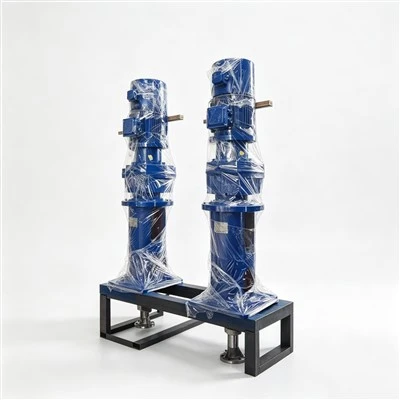
Effective shutdown protection is essential for long-term service life. For short-term outages of Industrial Side Entry Agitators, clean residual materials from blades and shafts and keep the equipment dry and tidy. For long-term shutdowns, cut off the power supply completely and implement comprehensive dust-proof, waterproof and anti-corrosion packaging protection to avoid motor moisture damage and component rusting in humid or outdoor environments. In addition, establish a complete equipment maintenance ledger to record inspection, maintenance and parts replacement records, forming a standardized management system. Standardized daily maintenance can extend the trouble-free service life of the equipment by 5 to 8 years, greatly reduce repair and replacement costs, and ensure continuous and stable industrial production.